
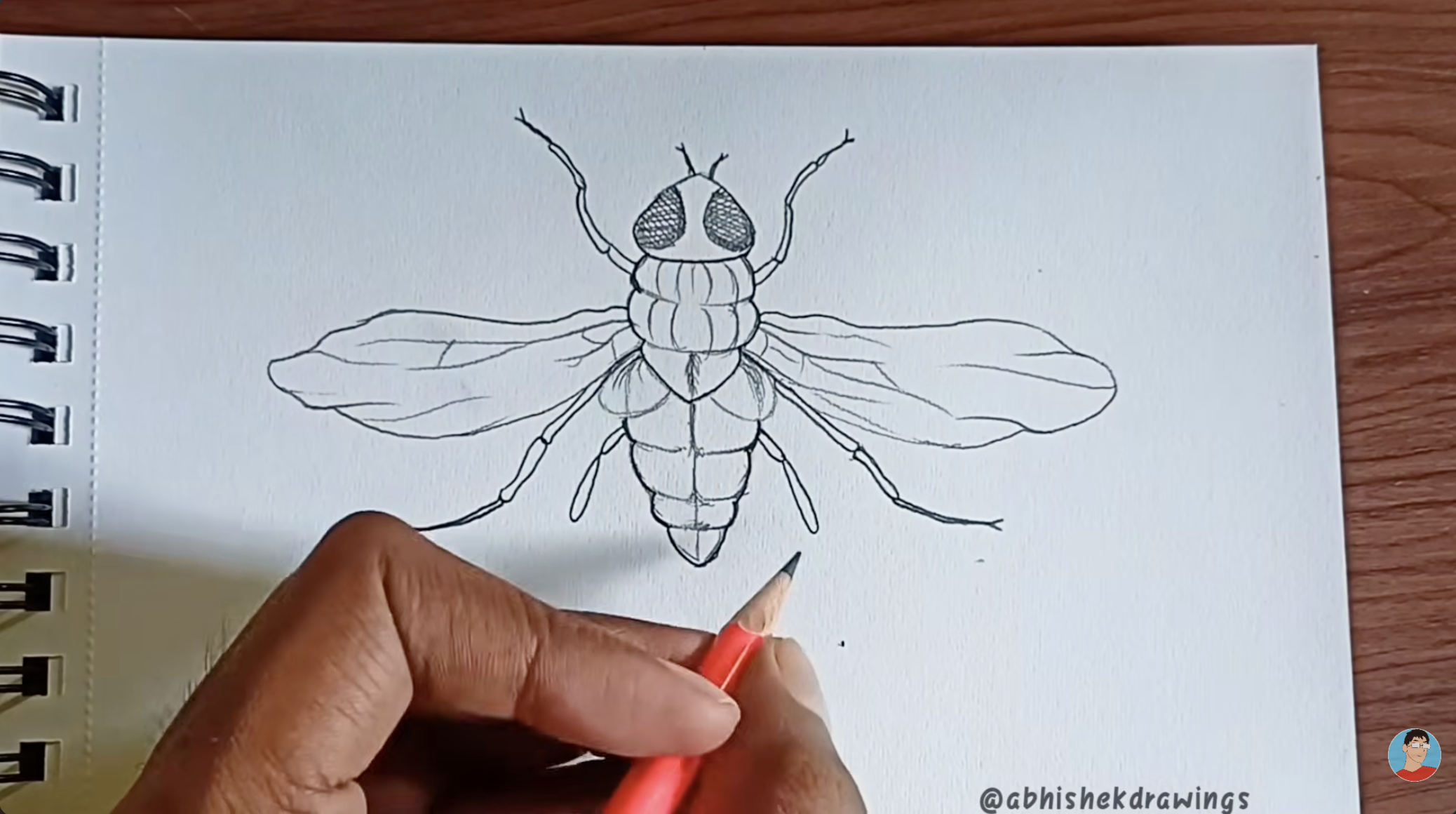
Watch this video about how to draw and label a housefly.
The following activities and questions are designed to help your students use their noticing skills to move through the poem and develop their thinking skills so they understand its meaning with confidence, using what they’ve noticed as evidence for their interpretations. Read more about the framework upon which these activities are based.
-
Warm-up: Read this definition of a prose poem. Have you ever seen a prose poem before? What does it remind you of? What questions do you have about it?
-
Before Reading the Poem: Watch this video about how to draw and label a housefly. If you feel inclined, draw along with the video. Share what you learned with a classmate or small group.
-
Reading the Poem: Silently read the poem “[When I come home they rush to me, the flies]” by Aracelis Girmay. What do you notice about the poem? Note any words or phrases that stand out to you or any questions you might have.
-
Listening to the Poem: Enlist two volunteers and listen as the poem is read aloud twice. Write down any additional words and phrases that stand out to you. You might enjoy listening to the poet read the poem.
-
Small Group Discussion: Share what you noticed about the poem with a small group. Based on the details you just shared with your small group and the resources from the beginning of class, is this a prose poem? Why or why not? How does the structure of the poem inform your reading?
-
Whole Class Discussion: What might flies symbolize? Why? Read the “About The Poem” section at the end of the poem. How does this inform your reading of the poem?
-
Extension for Grades 7-8: Write a prose poem that responds to this one, from the point of view of the flies. Or, write a prose poem about something on your mind. How might you use the form in your own work? Share your poem with the class. Discuss how it felt to write in this form.
-
Extension for Grades 9-12: Prepare for a debate or discussion by reading more poetry. Choose a side, either prose poetry or traditional poetry, whatever that means to you. Find three or more poems for your side and share why you like this form.
“Why the prose poem should appear under the category of polemic is something of a puzzle. Perhaps its ambiguity is key—is it a form? A genre? What differentiates it from such recently coined categories as flash fiction or the short short? How can it be a poem at all, lacking that seemingly essential formal marker of poetry, the line-break?” Read “Mutable Boundaries: On Prose Poetry” by Karen Volkman.
Prose poem: a poem that lacks the line breaks traditionally associated with poetry. Read more.