
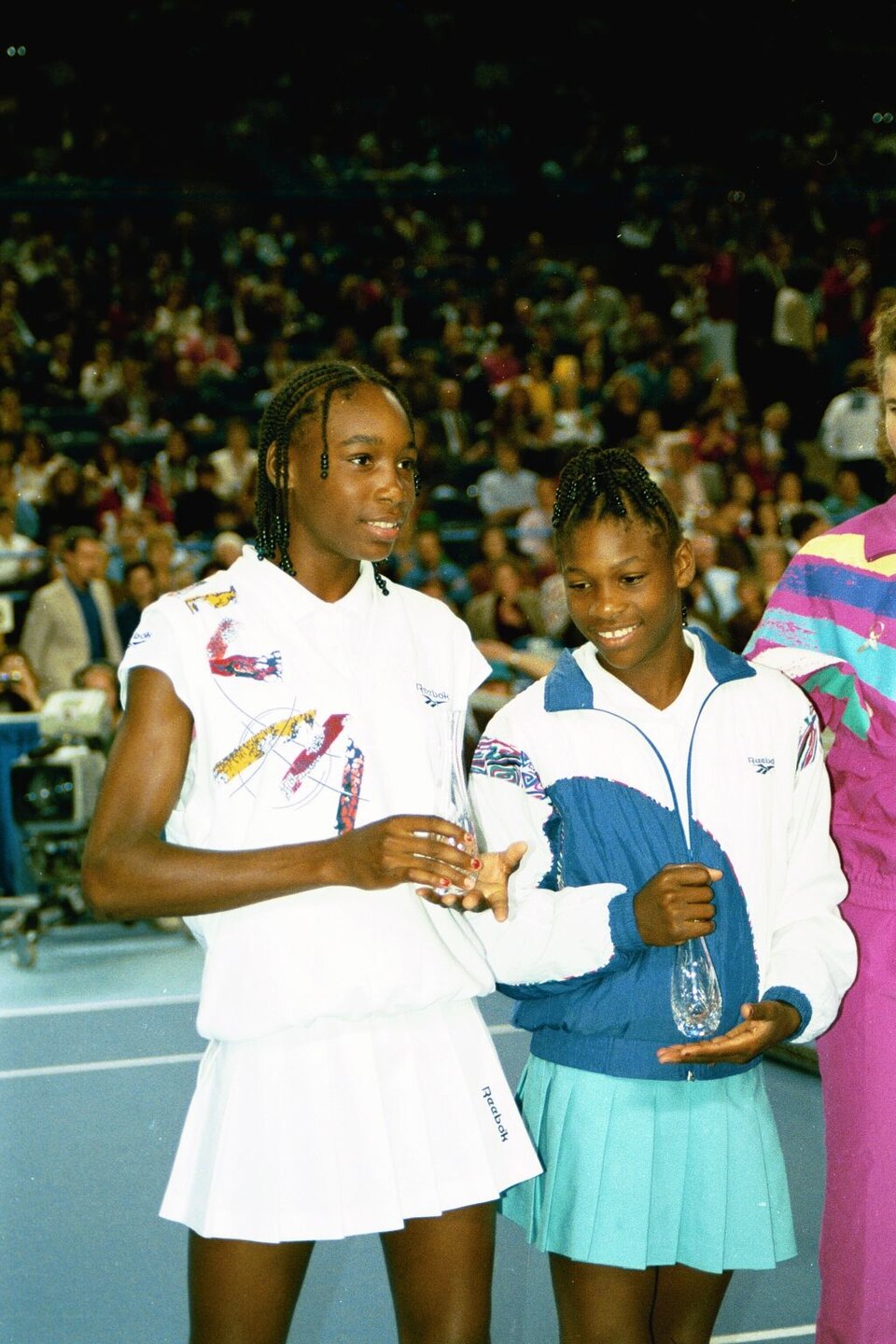
Look at this photo of the young Venus and Serena Williams before their doubles tournament.
The following activities and questions are designed to help your students use their noticing skills to move through the poem and develop their thinking skills so they understand its meaning with confidence, using what they’ve noticed as evidence for their interpretations. Read more about the framework upon which these activities are based.
-
Warm-up: In your notes, draw a box. In that box, list ways in which people have tried to box you in based on their assumptions about you. These might include gender, race, background, etc. Then, outside of the box, write a few words or phrases that describe how you want to be seen. If you feel comfortable, share with your class how it felt to be boxed in.
-
Before Reading the Poem: Look at this photo of the young Venus and Serena Williams before their doubles tournament. What stands out to you in the photo? What questions do you have?
-
Reading the Poem: Silently read the poem “Venus & Serena Play Doubles on Center Court” by Kate Rushin. What do you notice about the poem? Note any words or phrases that stand out to you or any questions you might have.
-
Listening to the Poem: Enlist two volunteers and listen as the poem is read aloud twice. Write down any additional words and phrases that stand out to you. You may want to listen to the poet read the poem.
-
Small Group Discussion: Share what you noticed about the poem with a small group. How do the resources from the beginning of class connect to the poem? In the poem, how are the Williams sisters boxed in? How does the speaker in the poem feel about this? How does this compare to your own experience or the experience of your classmates?
-
Whole Class Discussion: What imagery do you see in the poem? How or why is it important? How does the poem use juxtaposition, and what does it reveal?
-
Extension for Grades 7-8: In honor of Black History Month, read more poems by Black poets. Choose a poet to read, research, and enjoy. Then, create a visual celebrating that poet’s work. Work with your teacher to create a timeline in your school that honors these poets.
-
Extension for Grades 9-12: Think back to the writing that you shared at the beginning of class. Write a poem about a time when you or someone you know was boxed in. How did this experience feel? If you feel comfortable, share your poem with the class.
“Through learning that teaches honest history, introduces servant leadership (an approach that focuses on leadership in service of the community), and eases entry into the movement for justice, we aim to help young people realize their power to shape the future.” Find resources for youth learning, reflection, and action from Learning for Justice.
Allusion: a reference to a person, event, or literary work outside the poem.