
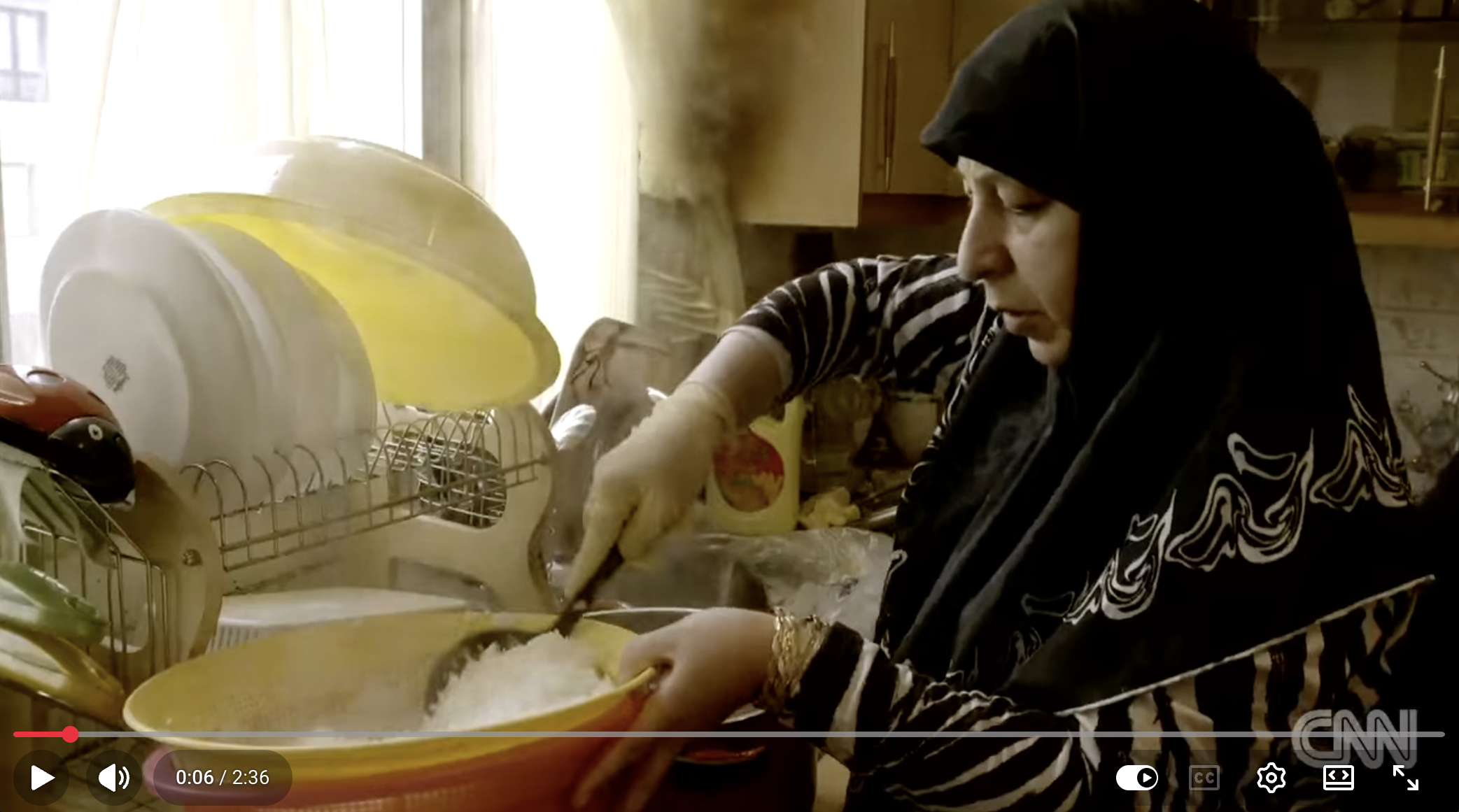
Watch this video from CNN about Iranian food and culture.
The following activities and questions are designed to help your students use their noticing skills to move through the poem and develop their thinking skills so they understand its meaning with confidence, using what they’ve noticed as evidence for their interpretations. Read more about the framework upon which these activities are based.
-
Warm-up: Read about how to say “bon appétit” in other languages and cultures. What is something that you learned or were surprised by? In your own family or culture, what phrases do you use for food or traditions surrounding food?
-
Before Reading the Poem: Watch this video from CNN about Iranian food and culture. What is something that you learned in the video?
-
Reading the Poem: Silently read the poem from “Sister Tongue” by Farnaz Fatemi. What do you notice about the poem? Note any words or phrases that stand out to you or any questions you might have.
-
Listening to the Poem: Enlist two volunteers and listen as the poem is read aloud twice. Write down any additional words and phrases that stand out to you.
-
Small Group Discussion: Share what you noticed about the poem with a small group. How do the resources from the beginning of class connect to the poem? What do you think the title “Sister Tongue” means?
-
Whole Class Discussion: The speaker in the poem offers different translations for the phrase noosh-e joon. What are these different translations? How do these phrases express gratitude?
-
Extension for Grades 7-8: This poem explores expressing gratitude through food and culture. What are some foods or things that you are grateful for? Why? If you are able, print out an image of this item and create a class gratitude wall.
- Extension for Grades 9-12: Write a poem to someone or something expressing gratitude. What do you need to say to this person or thing? Why?
“Poetry is a space with vast permission for nuance. Communities—ecosystems, towns, metropolises—need nuance. Now more than ever we need to counter our lack of critical inquiry, our tendencies toward binary thought, our gravitation to ideas from the left or the right, and falling back on inherited givens. We need nuance to counter easy answers to complex issues. The world of poems allows us to inhabit unpopular spaces, cast light on evils that don’t always present as evils. Poems also help us find beauty in the quotidian, the awkward, or the untested, to view the world through previously shuttered windows. Poets want to shed this weird light. Healthy communities are able to value this light-shedding.” Read an interview with Farnaz Fatemi.