
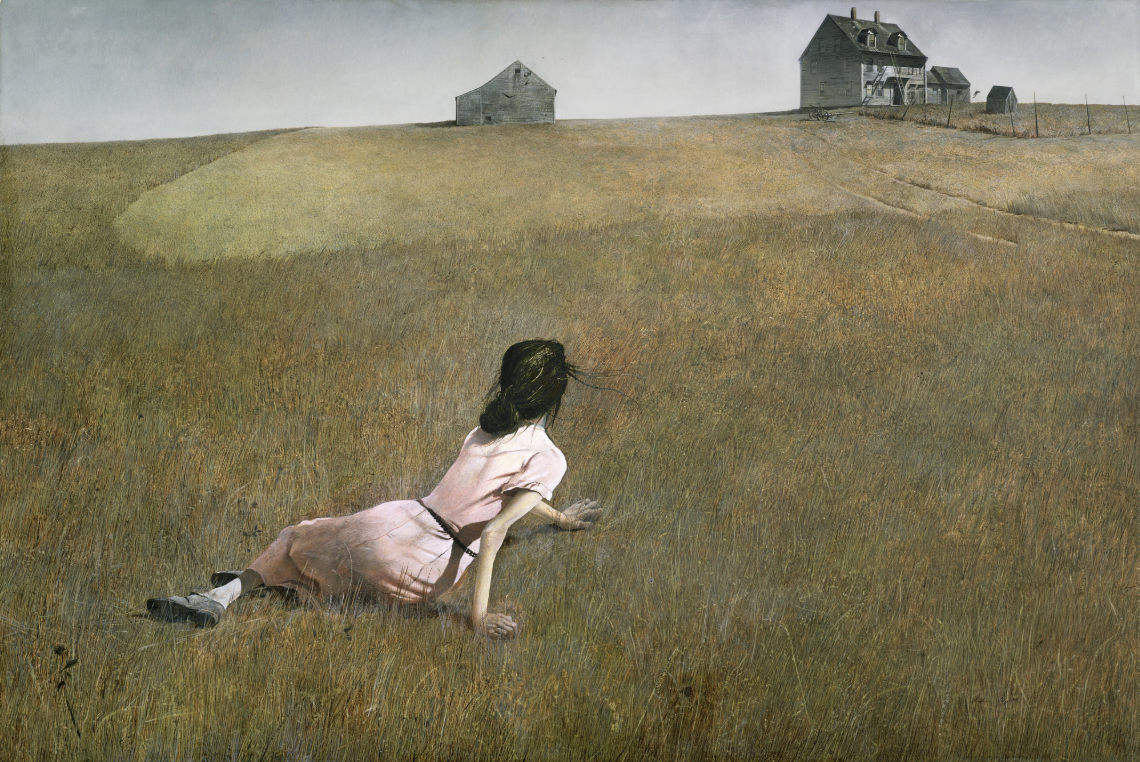
Look closely at the image of the painting “Christina’s World” by Andrew Wyeth.
The following activities and questions are designed to help your students use their noticing skills to move through the poem and develop their thinking skills so they understand its meaning with confidence, using what they’ve noticed as evidence for their interpretations. Read more about the framework upon which these activities are based.
-
Warm-up: Watch the video here of the song “Just a Girl” by No Doubt. What lyrics or phrases stand out to you? Why?
-
Before Reading the Poem: Look closely at the painting “Christina’s World” by Andrew Wyeth. What stands out to you about the painting? Why? Look again. What else can you see?
-
Reading the Poem: Silently read the poem “As Girl” by Annie Wenstrup. What do you notice about the poem? Note any words or phrases that stand out to you or any questions you might have.
-
Listening to the Poem: Enlist two volunteers and listen as the poem is read aloud twice. Write down any additional words and phrases that stand out to you. You may enjoy listening to the poet read the poem.
-
Small Group Discussion: Share what you noticed about the poem with a small group of students. How might this poem connect to the resources from the beginning of class? What do you think of the title “As Girl”? How does the tone in the poem shift from the beginning to the end?
-
Whole Class Discussion: An allusion is a reference to a person, event, or literary work outside the poem. What allusions can you find in the poem? What might these say about girlhood and/or childhood? How do these compare or contrast to your own childhood? Read the “About this Poem” section of the poem. How does the allusion to the Dena’ina raven inform your understanding of the poem?
-
Extension for Grades 7-8: What might a poem about your own life say? Write it, including allusions to things that are important to your life. If this poem is titled “As Girl,” what might your title be?
-
Extension for Grades 9-12: In honor of Native American Heritage Month, choose poems to read and celebrate. Choose two to three poets to read and research. Compile what you learned into a virtual gallery walk, and share your work with your teacher and classmates.
“The raven tales are stories featuring the trickster figure Raven that come from the Athabaskan (Dene) speaking peoples of the Pacific Northwest and other First Nations of the region of modern-day Canada. Raven, like the trickster figures of other Native peoples of North America, is depicted in these stories as a supernatural entity who may be a wise man or a fool.” Read more about the significance of the raven in Indigenous folklore.
Sonnet: a fourteen-line poem traditionally written in iambic pentameter, employing one of several rhyme schemes, and adhering to a tightly structured thematic organization.