
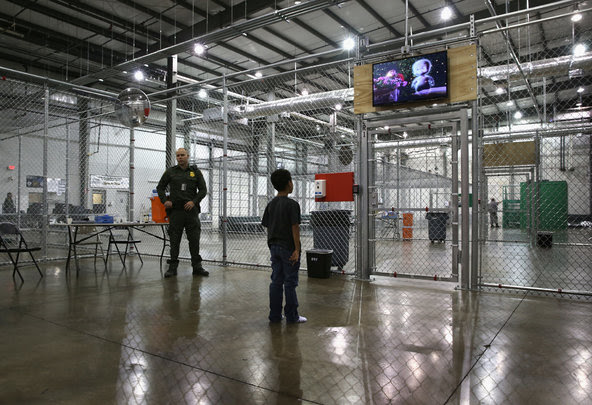
Look closely at this image from the Learning Network.
The following activities and questions are designed to help your students use their noticing skills to move through the poem and develop their thinking skills so they understand its meaning with confidence, using what they’ve noticed as evidence for their interpretations. Read more about the framework upon which these activities are based.
-
Warm-up: Look closely at this image from the Learning Network. What stands out to you in this image? Why? Look again. What else do you see? Read the caption in the photo. What does this make you think or question?
-
Before Reading the Poem: Listen to the song “Por Si Acaso No Regreso” by Celia Cruz and read the bilingual lyrics.
-
Reading the Poem: Silently read the poem “Como Tú / Like You / Like Me” by Richard Blanco. What do you notice about the poem? Note any words or phrases that stand out to you or any questions you might have.
-
Listening to the Poem: Enlist two volunteers and listen as the poem is read aloud twice. Write down any additional words and phrases that stand out to you. You may enjoy watching this Dear Poet 2026 video of the poet reading the poem.
-
Small Group Discussion: Share what you noticed about the poem with a small group. Based on the details you just shared and the resources from the beginning of class, what do you think of the title, “Como Tú / Like You / Like Me”? How has history and place impacted the speaker of the poem? Why?
-
Whole Class Discussion: How does the repetition impact the poem? Is this poem a protest poem? Why or why not? What does this poem say about belonging and/or the self? (Teachers, you can find discussion materials from Humanizing Deportation.)
-
Extension for Grades 7-8: Read the poem referenced in the epigraph, “Como Tú / Like You” by Roque Dalton. What do you like about this poem? How is it similar to and/or different from the poem you read? Write a poem of your own that uses the same repetition of como tú or something from a language that feels meaningful to you. Participate in a class discussion where you read your poem and discuss similarities and differences in your classmates’ poems.
-
Extension for Grades 9-12: Read more poems of protest and social justice. Research a social justice issue that is meaningful to you. Write a paragraph explaining what you researched, learned, and how the poems you read deepened your understanding of this issue. Share your writing with your teacher.
“Poetry often reveals the real names, faces, and emotions behind issues that are too often abstracted by news, politics, and media. I like to think of poetry as the proverbial campfire around which we can share our stories across time and distances, and foster compassion, understanding, and empathy for one another. That’s especially important during these confusing, uncertain, and divisive times in our nation. Poetry lets us understand that, although our stories and experiences are unique and singular, the underlying emotions are universal and we share a common humanity that feels like the very ideals we are still striving to achieve for in our democracy, as our motto notes: E pluribus unum, ‘Out of many, one.’” Read an interview with Richard Blanco.
Political poetry is poetry that is related to activism, protest, and social concern, or that is commenting on social, political, or current events. Read more.