
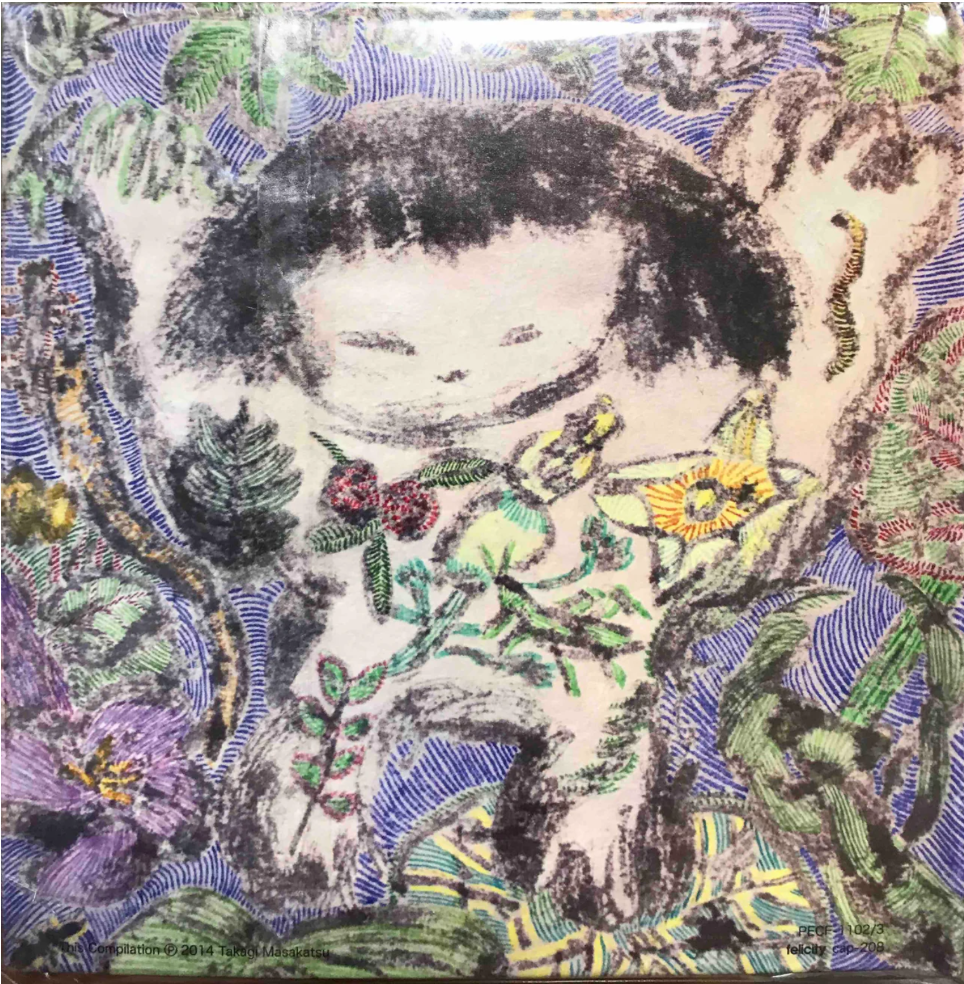
Look closely at the album cover Kagayaki by Masakatsu Takagi.
The following activities and questions are designed to help your students use their noticing skills to move through the poem and develop their thinking skills so they understand its meaning with confidence, using what they’ve noticed as evidence for their interpretations. Read more about the framework upon which these activities are based.
-
Warm-up: Look closely at the album cover Kagayaki by Masakatsu Takagi, or listen to a song from the album. What stands out to you? What do the colors and patterns make you think? Why?
-
Before Reading the Poem: Play the song “All Is Love” by Karen O and the Kids. As you listen, what feelings does this song evoke? Why? What words or phrases from the lyrics stand out?
-
Reading the Poem: Silently read the poem “Throwing Children” by Ross Gay. What do you notice about the poem? Note any words or phrases that stand out to you or any questions you might have.
-
Listening to the Poem: Enlist two volunteers and listen as the poem is read aloud twice. Write down any additional words and phrases that stand out to you. Or, you may opt to listen to the poet read the poem.
-
Small Group Discussion: Share what you noticed about the poem with a small group. How do the resources from the beginning of class compare to the poem? What do you think of the title “Throwing Children”?
-
Whole Class Discussion: Read more about prose poetry. Discuss with your class if/how this poem reads like poetry.
-
Extension for Grades 7-8: What happens next? Write a poem from the point of view of the kid in the poem. What might the kid say? Or, write your own prose poem. Share your writing with the class.
-
Extension for Grades 9-12: Ross Gay explores the short essay form in his book, The Book of Delights. Watch this video of the poet reading and read a few of his essays. Over the course of a week or longer, write a short essay every day about something that brings you joy or delights you. Share with your class either one of your essays or what you learned from this process of noticing delights.
“The individual turnings of this poem are marvelous to me. Its essence would seem to be momentum, narration moving relentlessly, heart-chillingly forward in a single rolling sentence.” Read Linda Gregerson’s reflection, “The Poem that Changed My Life: Ross Gay’s ‘Bringing the Shovel Down.’”
Prose poem: a poem that lacks the line breaks traditionally associated with poetry.