
On the morning of Saturday, November 8, 2025, at 5:48 a.m. PST, a soft dawn light roused me from rest.
Outside, I noticed the still air in contrast to a wind howling through towering sycamores nearby, leaves swaying and fraying in technicolor brilliance as they detached from their branches and drifted in a graceful descent. Thirty minutes later, I learned that my maternal grandmother—Knarig Baloumian Koroukian, the finest writer I know, the most creative and humane soul I’ve encountered, one of my greatest sources of steadfast support and love, a life’s treasure in every sense—had entered eternal rest at the exact time the light and wind had danced.
It was only fitting that the swaying leaves marked her passage. Knarig Metzmama didn’t just admire nature, she fawned over trees with audible coos of affection. From her window, she sang greetings to birds fluttering by or deer prancing. She took offense during nature documentaries: How dare the lion mangle the beautiful zebra boasting such glorious stripes? Her uplifting and energizing strength arose from her profound love for other beings, a choice she could have easily, and justifiably, dismissed. She spent her first decade in a refugee camp of Armenian Genocide survivors. Then came the trials of being the eldest of nine, raising her siblings as if they were her own children and how that complexity impacted her journey through fertility and motherhood.
Knarig navigated decades of post-genocide trauma, civil war in Lebanon, the upheavals of migration, a global pandemic, the limits placed upon women of her generation, and so much more. Given all of this, she would’ve been perfectly justified to carry a sour disposition. But she did something revolutionary by choosing hope over despair, embracing love over resentment, and always striving for more colors, more languages, more letters, more magic, more sugar, more kekhké, more Nescafé, more hugs, more smiles, more trips, and more invitations to her beloved Beirut home overlooking the Mediterranean Sea. Her appetite for life was boundless, as evinced by her rapturous response to a simple car ride past some trees, by the miracle she saw in fish, by her willingness to traverse thousands of miles in her eighties so she could support her grandchildren through their milestones, including my wedding at Tatev Monastery.
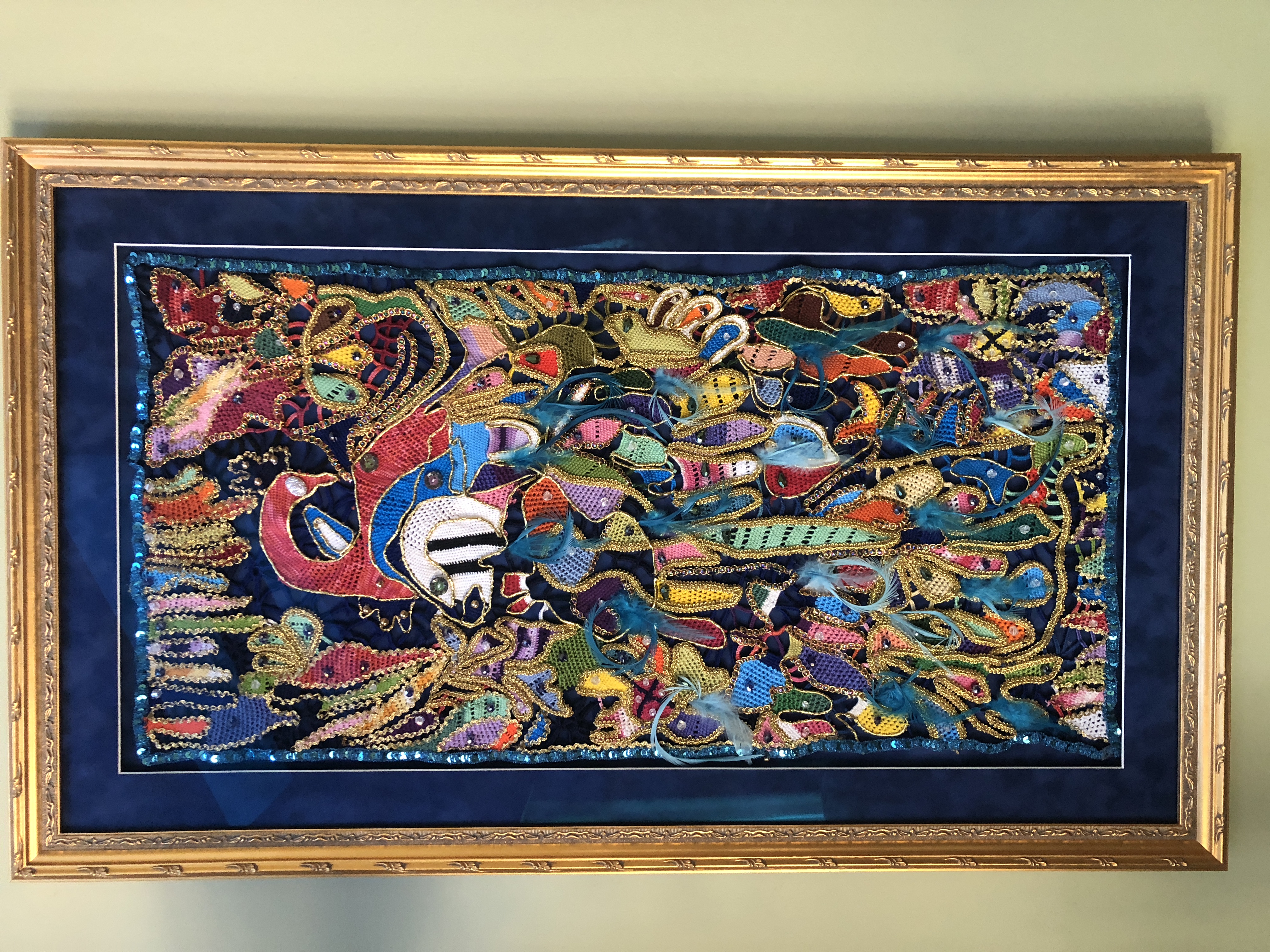
Her creativity leaves me awestruck. Her epistles—the poetic letters we each received for our birthdays, graduations, and beyond—are works of art that required multiple handwritten drafts to polish her phrasing, sentiments, and penmanship. Beyond her literary gifts (a proud inheritance from her father Mardiros) was her output as a visual artist. In the final decades of her life, Knarig hand-crocheted some nineteen animals that now adorn the walls of her descendants’ homes, scattered across the global Armenian diaspora. Her creations are treasures of vibrant color, natural wonder, and the result of steady, committed hands that have stitched, cooked, crafted, hugged, hoisted, and heralded better beginnings.
She brought that same wonder, joy, and generosity whenever I shared my work with her. Metzmama’s responses motivated me to create, even when her limited English—the fifth language she started learning in adulthood—prevented her from fully grasping my writing. “I don’t totally understand it, but somehow it moved me, and I love you, so I want to hear it again,” she’d confess with playful laughter, illuminating how meaning is more than substance: it’s rich with feeling, connection, and a spirit that transcends language. This dynamic gave rise to the “Metzmama test.” For any project I questioned (consistently), if Knarig Metzmama approved (pretty much always), then I knew I was onto something. It wasn’t a quality-control measure as much as it was a process of accepting the inherently struggle-ridden journey of trying to create something new, and that often we’re best equipped to manifest novelty with a nudge from our loved ones. If Knarig Metzmama believes in me, I reasoned through the framework of the “test,” then I can follow her lead. Now, in her corporeal absence, if I can hear her uproarious cackle and see her bemused smile when I imagine sharing with her a composition—a poem, a piece of loud music, a concept for a civic project—then I know I’m on the right path. As time passes, I fear the fading of that intuitive interconnectivity, yet I feel her through the physical gifts she handcrafted. I feel the warmth of her hug whenever I wear her handmade sweaters. I see the vibrancy of her perception whenever I gaze at her crocheted animals. I see the twinkle in her eye whenever my newborn daughter smiles. And I’m empowered by the example set by Knarig’s attitude whenever I consider how, despite a life rife with hardships, she embodied incomparable optimism.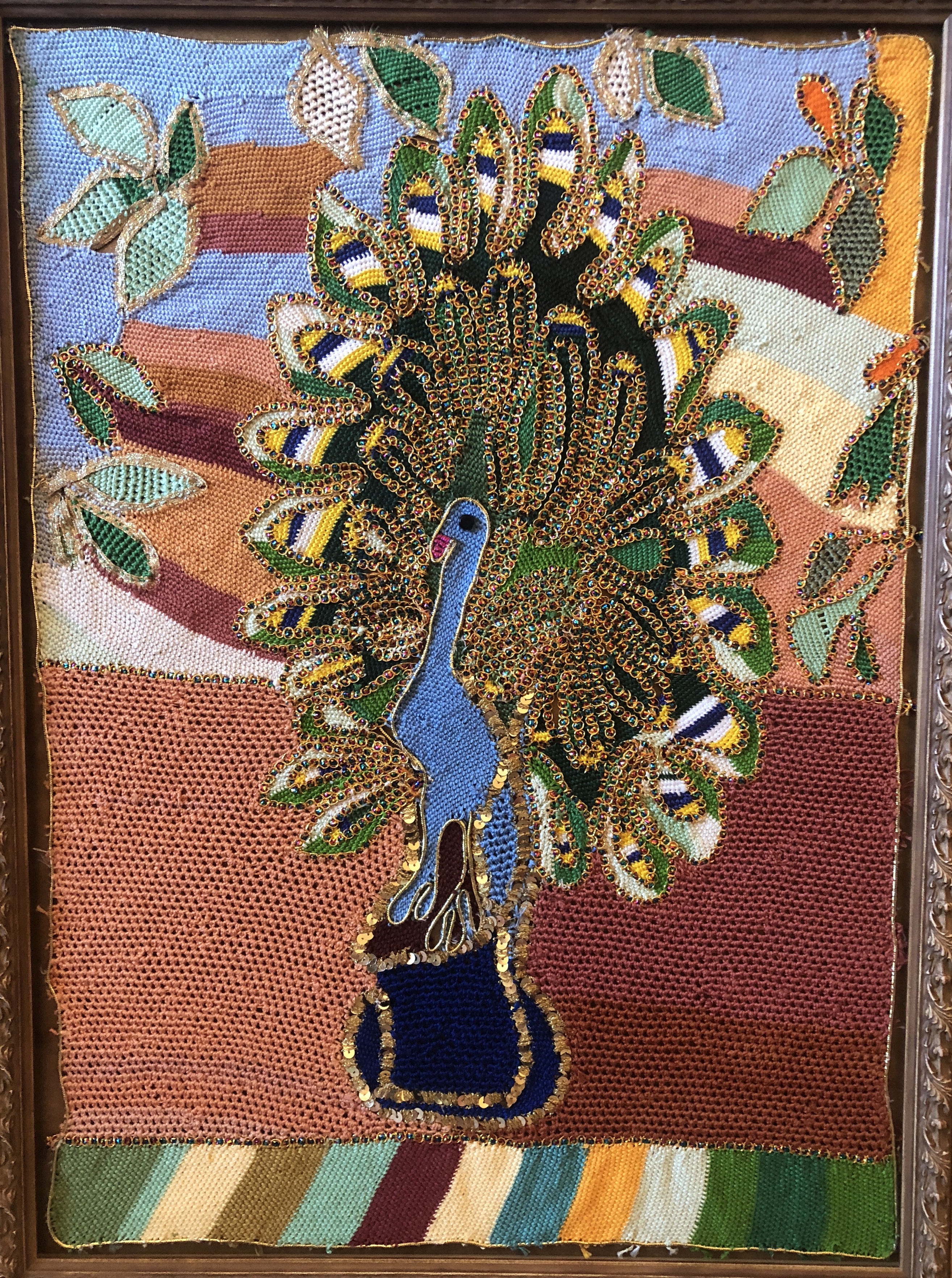
She modeled a singular commitment to craft. Her passion and urgency to create by hand was unfettered, notwithstanding fingers curved by arthritis. She rarely complained. She simply immersed herself into a process abundant with the ultimate prize: to meditate on and express affection to her beloveds. She was the quintessential craftswoman: patient, persistent, process-oriented.
The content of my work—whether organizing volunteers at a refugee resettlement center, leading workshops at the intersection of creative writing and conflict transformation, or cultivating poetry programming for fire survivors—is pursued in the inspiration and remembrance of the riches that exist within and among those who, like Knarig Metzmama, endure and somehow surmount immense adversity. The suffering of our neighbors and loved ones and ourselves may, in fact, be an invitation to turn toward, to engage, to seek solace in community and our own inner strength. The suffering Knarig Metzmama experienced fueled her joie de vivre and imbued her with the kind of wisdom and insight that remain accessible regardless of human cruelty.
To laugh in such darkness; to sing in such silence; to love despite such hate; to create even with such destruction and erasure. This is just a modicum of Knarig Metzmama’s legacy that I receive and seek, humbled and grateful, through art and community, in sites of loss, because that’s who she was, that’s where she still is, that’s who I hope to be, and, at our very best, that’s who we can all become.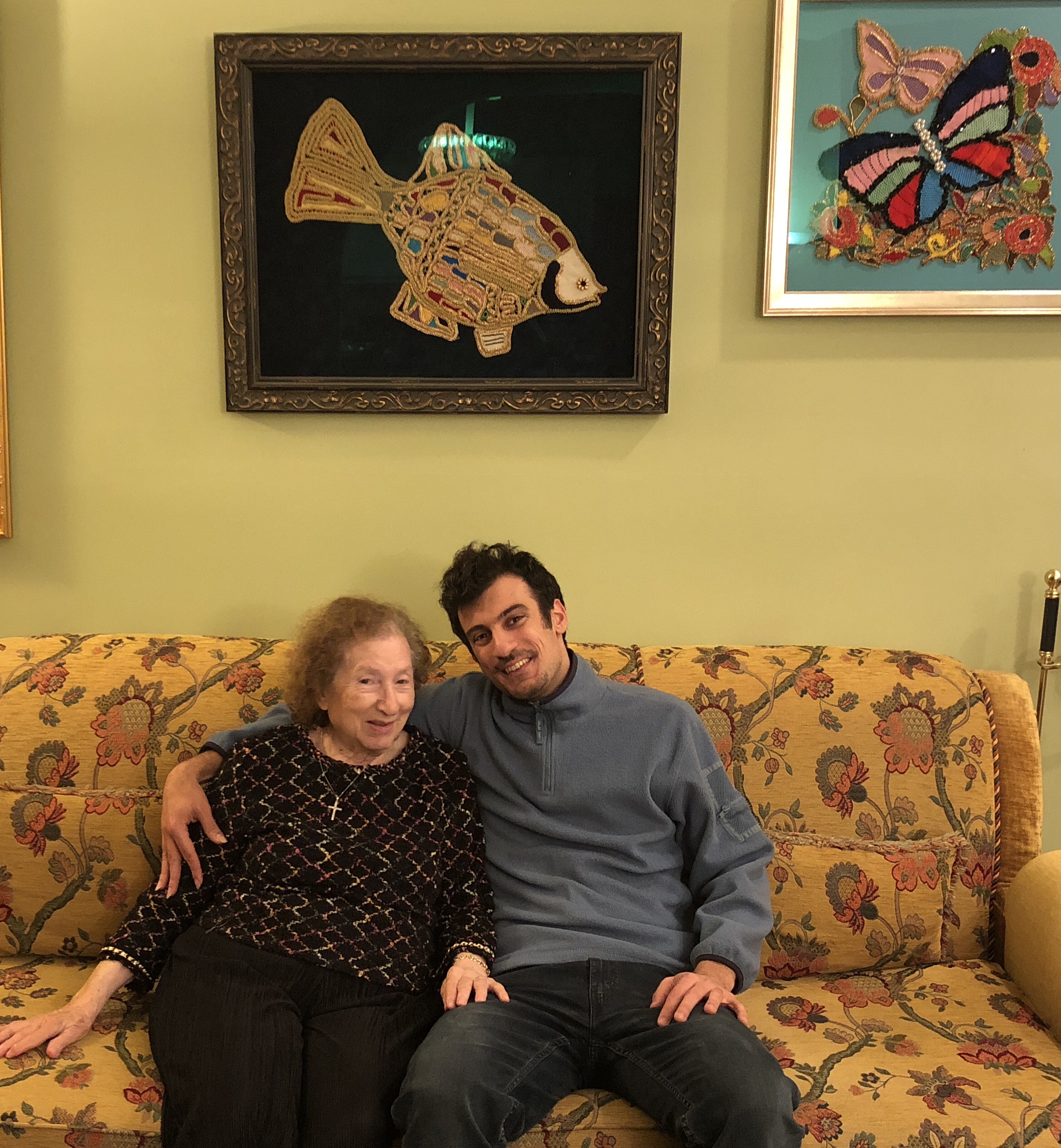
The world feels darker without Knarig. Yet this mother of four, grandmother of eight, great-grandmother of twelve (and counting) has woven herself so deeply into the fabric of our souls that saying “goodbye” minimizes the immutable expanse of her presence. I feel so unbelievably blessed to have had such a close relationship with my beloved Metzmama for my entire life, and I pray we preserve, practice, cherish, and pass on the countless gems of wisdom that she gifted to the world.
As her final hours approached and I said my last goodbye, I drafted this poem in her honor …
Elegy for Knarig
When your mother loses her mother,
the shadow of that loss chills
whatever amount of embrace remains
between yourself and the person who brought you into this world.
the loss of any matriarch
disintegrates a primal bond
to that which makes us whole
to that which brought us here
to that thread braiding us in this tapestry of life
to preceding generations
a rupture from their sojourns, their homes, their balms,
their songs we seek to play at the final measure
despite governmental incompetence too meaningless for such gravitas
that a life could both begin and end
with the vitriol of despots juxtaposed against
the dignity of humanitarians
in refugee camps, in war-torn cities,
in final fermata calling mama, calling home
fantasy of catharsis
melody consuming the appetite of
worms salivating in the cemetery
plotting by her tomb, a room of her own
in the eternal palace of rest
from the duress of all this stress and uncertainty
about which will be her final breath
when to call the doctor,
when to visit the hospital,
when to cry for mercy,
when to let go
how many more times to say:
I love you, I need you, I can’t do this without you
from wondering about the last time,
I’ll see the beneficent moonlight of your radiant smile,
or hold your hand and trace the veins
that gave rise to mine
the last time I can fold your shirt, fix your bed, scratch your back, moisturize dry flesh,
ponder your slumber, study breath, guide your arm through a coat,
admire your wonder alive in the hands of a poet who gave life to
artifacts unbound by time’s linear constraints
The technicolor bird. Rainbow peacock.
Ebullient elephant. Festive fish. Snuggling dogs.
An ocean of animals, like the trees
for which each leaf, each branch, each root,
each spec of soil, each wisp of wind
was, is, will be an object of adoration,
pure hagiography
where each nature show was ultimately an excuse to enjoy your commentary
about the ճարպիկ կապիկ,
or the անուշիկ ձուկիկ,
or the վայրենի վագր,
Why couldn’t the tiger leave the zebra alone, just for this once?
Why such suffering in a life so beautiful?
When your heart is so pure and so full of adoration,
so sincere in its devotion to faith, family, and curiosity
these are the questions to consider
A heart overflowing with love, you’ve shown,
is the true meaning of strength
the fuel that lifted you
from a refugee camp of Armenian Genocide survivors and kept you going
through civil war in Beirut, through leaving behind a home and countless goodbyes
coming to America
learning new languages
surviving cancers and surgeries—the heart, the lungs, the breast, the skin, the soft tissue
This love is more than a body.
She lives in each thread, each weave, each stitch,
this love lives every time I wear the crocheted sweater, star buttons firming fibers of embrace,
the woven extension to the right sleeve
just to keep wrists a little cozier.
A little more devotion, a little more dessert
a little more pause to smell the jasmine
a little more time to bask in the truth of her compassion,
of a love planted at the core of our very roots.