
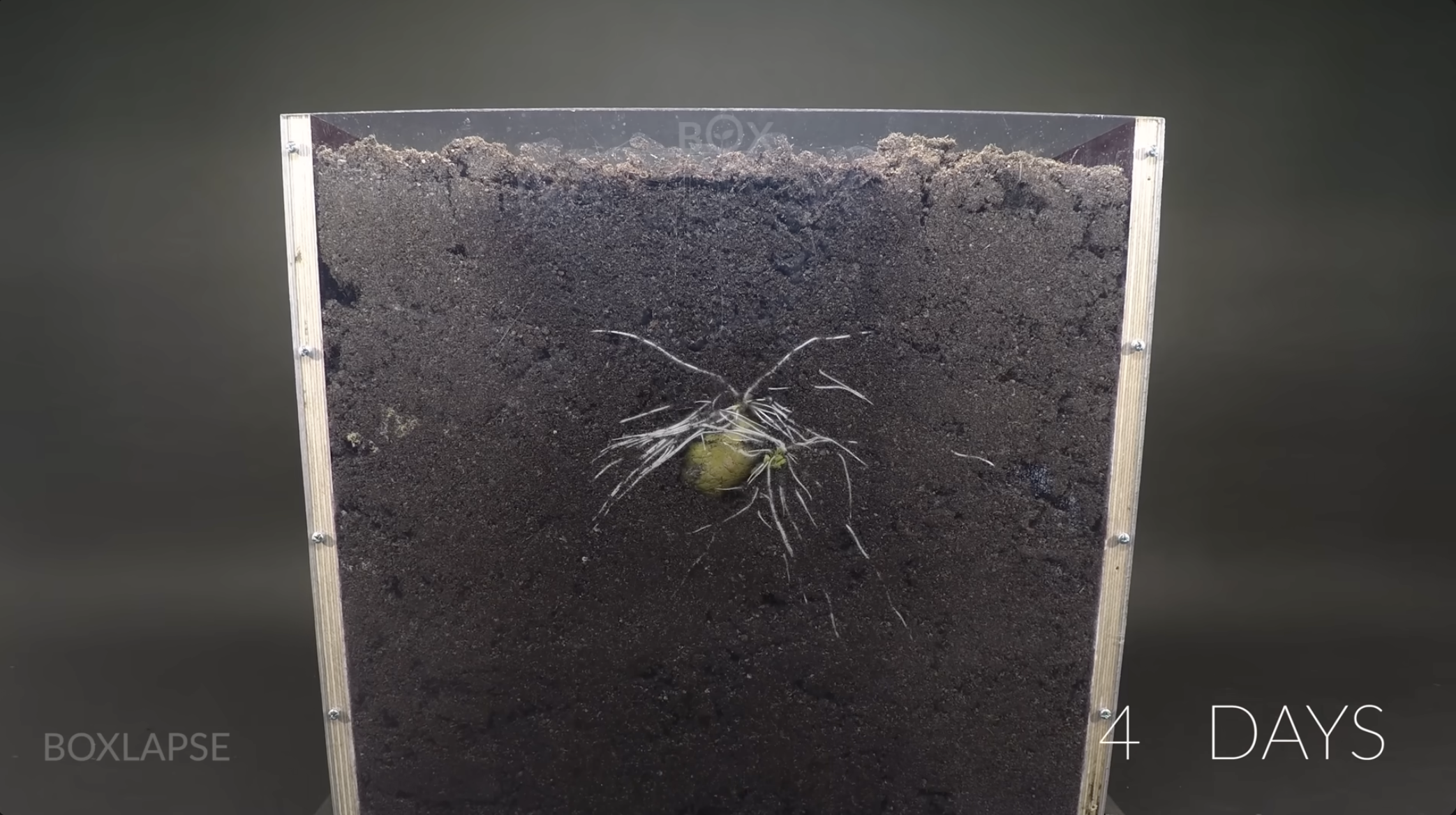
Watch this time-lapse of a potato plant.
The following activities and questions are designed to help your students use their noticing skills to move through the poem and develop their thinking skills so they understand its meaning with confidence, using what they’ve noticed as evidence for their interpretations. Read more about the framework upon which these activities are based.
-
Warm-up: (Free write or draw.) What comes to mind when you hear the line, “No, I will never shut the door of my senses”? Share your writing or drawing with a classmate. What did you decide to include? Why?
-
Before Reading the Poem: Watch this time-lapse of a potato plant. What did you notice? How might this compare to plants you see every day such as house plants, trees, etc.?
-
Reading the Poem: Silently read the poem “Wait Until It Grows Roots” by Tarfia Faizullah. What do you notice about the poem? Note any words or phrases that stand out to you or any questions you might have.
-
Listening to the Poem: Enlist two volunteers and listen as the poem is read aloud twice. Write down any additional words and phrases that stand out to you. You may enjoy listening to the poet read the poem.
-
Small Group Discussion: Share what you noticed about the poem with a small group. How do the resources from the beginning of class connect to the poem? Read about the golden shovel poetic form. Then, take a moment to read the original poem “Gitanjali 73.”
-
Whole Class Discussion: What line from “Gitanjali 73” does Faizullah borrow? How does the original poem change or inform your reading? What else does this make you think about?
-
Extension for Grades 7-8: As a class, choose either the borrowed line from “Gitanjali 73” or a line from Faizullah’s poem. Then, work together to write one golden shovel that uses your selected line. As a class, pay close attention to the borrowed line and the choices you make as poets to write your class poem. Read the poem together and discuss what makes this poetic form unique. How does your class poem compare to the poems you read? Why?
- Extension for Grades 9-12: Write two or three lines of poetry on scrap paper. (Teachers, depending on your students, you may want to give them parameters, like write two or three lines of poetry with at least ten lines.) Turn in your lines to your teacher. Then, select two or three lines and use them to try writing a golden shovel of your own. Pay attention to your original line and think about how you might write a new poem with that borrowed line. Share your borrowed line and original poem with the class. How did it feel to write in this form?
“We write long books where no page perhaps has any quality to make writing a pleasure, being confident in some general design, just as we fight and make money and fill our heads with politics—all dull things in the doing—while Mr. Tagore, like the Indian civilization itself, has been content to discover the soul and surrender himself to its spontaneity.” Read the introduction to Gitanjali written by W. B. Yeats.
Golden shovel: a poetic form wherein each word of one line from another poem serves as the end word of each line for a newly constructed poem. Read more.