
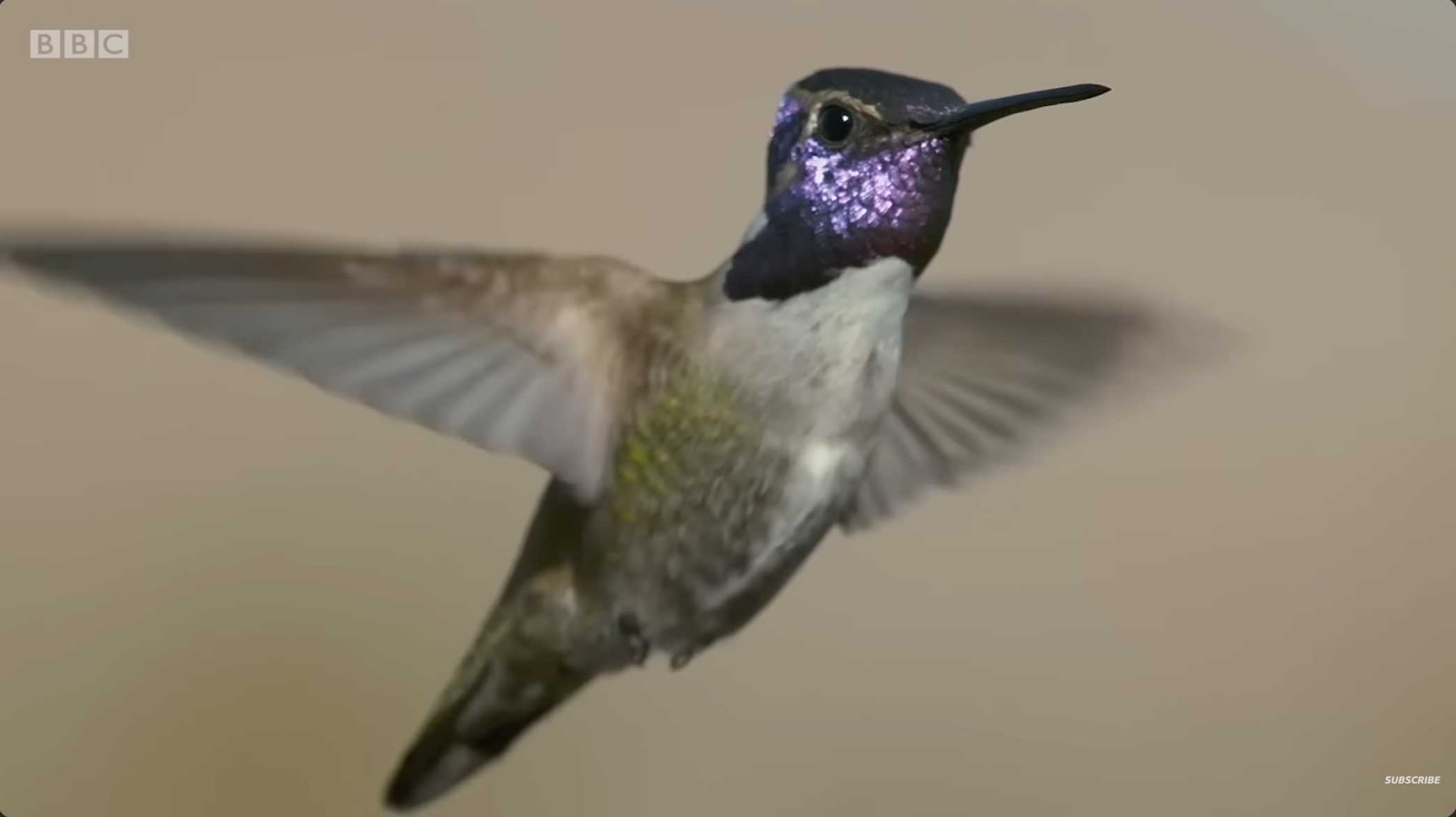
Watch this video about hummingbirds from BBC.
The following activities and questions are designed to help your students use their noticing skills to move through the poem and develop their thinking skills so they understand its meaning with confidence, using what they’ve noticed as evidence for their interpretations. Read more about the framework upon which these activities are based.
-
Warm-up: Watch this video about hummingbirds. What stands out to you? What did you learn about hummingbirds or what surprised you? What questions do you have?
- Before Reading the Poem: Listen to the song “Hummingbird” by Wilco. What stood out to you in this song? Why? What feelings does this song evoke?
-
Reading the Poem: Silently read the poem “Hummingbird Abecedarian” by Aimee Nezhukumatathil. What do you notice about the poem? Note any words or phrases that stand out to you or any questions you might have.
-
Listening to the Poem: Enlist two volunteers and listen as the poem is read aloud twice. Write down any additional words and phrases that stand out to you. You may also enjoy this recording of the the poet reading the poem.
-
Small Group Discussion: Share what you noticed about the poem with a small group. How do the resources from the beginning of class connect to the poem? What does this poem show about the relationships between humans and nature? When has something small in nature made you feel something bigger?
-
Whole Class Discussion: Read this poet’s About this Poem statement. The poet asks, “what goes on between each letter that is unsaid?” What do you think lives in the silences of this poem?
-
Extension for Grades 7-8: Work with a partner or small group to decide on a topic for your abecedarian poem. Then, spend time writing lines for each letter of the alphabet. After everyone has had time to write, share your lines. Select and combine the best lines into one cohesive collaborative abecedarian poem. Make sure that every person is represented in the poem. Share your poem with the class and discuss how it felt to explore this poetic form.
- Extension for Grades 9-12: Why does this poetic form endure? Read more abecedarian poems. Discuss in a Socratic seminar: What does this poetic form do that other poetic forms cannot? How do other poets use the form?
“How to write about place when one feels inextricably connected to certain landscapes that shift and change more often than the seasons? Yet, because of my relatively brief time spent in any one location for long, I am like clover—roots plentiful, covering a great area, but short in length—easy to remove and attach again in any given space. How can a poem situate itself without being fully entrenched? How to make the reader travel without getting lost?” Read this essay about nature and poetric form by Nezhukumatathil.
Abecedarian: a form guided by alphabetical order in which each line or stanza begins with a successive letter of the alphabet. Read more.