
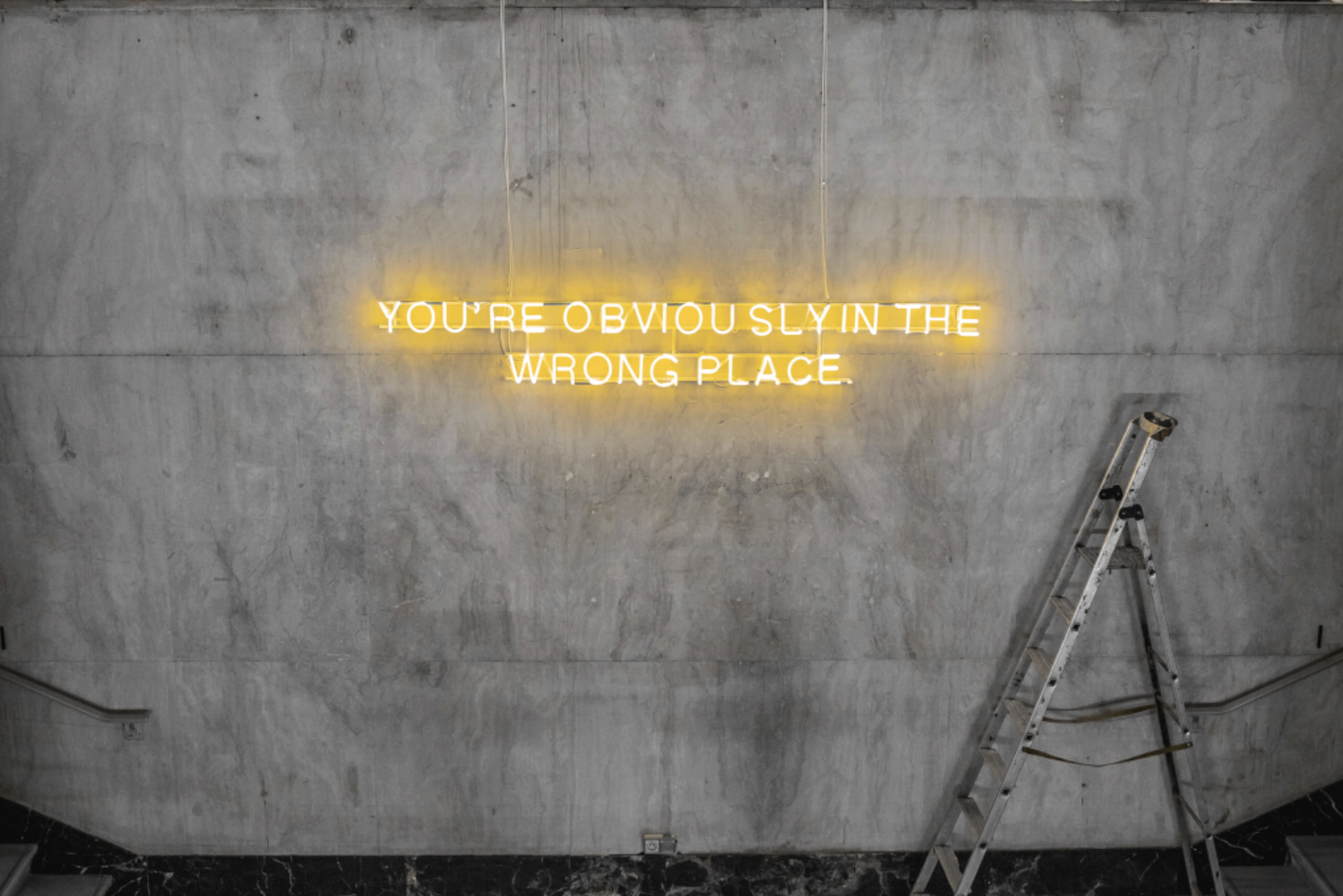
Choose an image from the exhibition “Figures of Speech” by Virgil Abloh.
The following activities and questions are designed to help your students use their noticing skills to move through the poem and develop their thinking skills so they understand its meaning with confidence, using what they’ve noticed as evidence for their interpretations. Read more about the framework upon which these activities are based.
-
Warm-up: Take out a blank sheet of paper and draw someone or something that represents you. In this drawing, use only lines, angles, and shapes. Share your drawing with a partner or small group. What do these lines and shapes reveal about you?
-
Before Reading the Poem: Choose an image from the exhibition “Figures of Speech” by Virgil Abloh. Spend time closely looking at the image and reading the caption. What did you notice? What does this piece represent?
-
Reading the Poem: Silently read the poem “a graphic” by Ed Roberson. What do you notice about the poem? Note any words or phrases that stand out to you or any questions you might have.
-
Listening to the Poem: Enlist two volunteers and listen as the poem is read aloud twice. Write down any additional words and phrases that stand out to you. You may enjoy watching this video of the poet reading the poem.
-
Small Group Discussion: Share what you noticed about the poem with a small group of students. Based on the details you just shared, how does the poem connect to the resources from the beginning of class? The title of the poem is “a graphic.” What does the imagery in this poem make you see? What might “figures of speech” mean?
-
Whole Class Discussion: Read another poem from Roberson’s sequence titled “line.” Then, reread both poems. What did you notice? What do the two poems have in common? What questions do you have?
-
Extension for Grades 7-8: Work with a partner. Have them read the poem aloud for you. As your partner reads the poem, respond to the poem using only lines, shapes, and angles. Swap and read the poem for your partner. Then write a few sentences explaining the choices you made and what in the poem made you respond the way that you did. Share your writing and drawing with the class.
-
Extension for Grades 9-12: Read about the poet’s life as a field researcher. Then, practice creating your own field notes. Over the course of a week, spend time outside of the classroom listening, observing, and watching in a space of your choice. This might be a hallway, the cafeteria, the bus stop, a park, etc. As you observe, take notes and/or draw what you notice. Organize your field notes and write a brief reflection about your experience. Share your work with the class.
Through Dear Poet, the Academy’s interactive educational project, students can write letters directly to award-winning, contemporary poets like Ed Roberson in response to a special series of recorded videos featuring the poets reading their work. Each poet will provide a personalized response to five students. All students will receive a certificate honoring their participation. Learn more.