
Three sessions live over Zoom with recordings available:
Session One: March 20, 2:30–3:45 p.m. ET
Session Two: March 27, 2:30–3:45 p.m. ET
Session Three: April 3, 2:30–3:45 p.m. ET
I have left no immortal work behind me—nothing to make my friends proud of my memory—but I have loved the principle of beauty in all things, and if I had had time I would have made myself remembered.
—John Keats to Fanny Brawne, February 1820
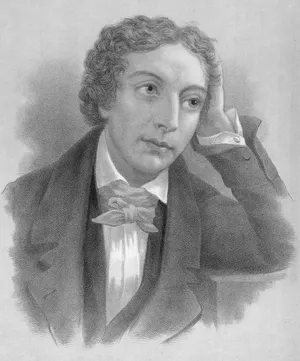
Largely undercelebrated in his twenty-five years of life—one influential contemporary reviewer dismissed him as an “ignorant, unsettled pretender”—John Keats would nonetheless compose a number of the English language’s most cherished and lasting poems in the years leading up to his death in 1821. Chief among these include the five celebrated odes of 1819 included in his last published volume then following year, generally considered to be his greatest poetic achievements: “Ode to a Nightingale,” “Ode on a Grecian Urn,” “Ode to Psyche,” “Ode on Melancholy,” and “To Autumn.”
In this three-part seminar, we will study Keats’s five great odes with all due vigor and care, engaging with their complex rhetorical arguments and savoring every aspect of their poetic composition. We will also read a small selection of other relevant poems, including a handful of his much-loved sonnets, which played a crucial role in the shaping of the odes, as well as his “Ode to Indolence,” which was written alongside the other odes but curiously omitted from the 1820 volume. We will likewise consider a sampling of his letters and the key concepts he introduces therein, including “negative capability,” “the objective correlative,” and “the vale of soul-making.”
Our approach to Keats’s poetry will be informed by his biography, including his lower middle-class origins, education, orphanhood and family life, apprenticeship as an apothecary-surgeon, crucial friendships, and his star-crossed romance with Fanny Brawne. We will also discuss his reception by the conservative literary culture of his time (whose presumptions about class, politics, poetic decorum, and even ideas of masculinity Keats challenged); his celebration by such contemporaries as Leigh Hunt and Percy Shelley, who drowned with a copy of Keats’s last book in his jacket pocket; as well as Keats’s eventual reevaluation, poetic influence, and lasting legacy.
But above all, we will embrace the poems as they exist in front of us on the page, with all their charm and nuance, and with an eye to letting them live on in your minds and hearts.
Class meets from 2:30–3:45 p.m. ET on Fridays, March 20, March 27, and April 3.
Session 1: “Ode on Indolence” and “Ode on a Grecian Urn”
Session 2: “Ode to Psyche” and “Ode to a Nightingale”
Session 3: “Ode on Melancholy” and “To Autumn”
A syllabus will also be provided to registrants detailing any secondary readings to be completed before the start of the course. All poems covered can be found in John Keats: The Major Works (Oxford University Press, 2009).
This live, virtual course is structured to encourage active participation. Registrants will receive Zoom links a week before each session, a day prior to each session, and the morning of each session. All recordings will be made available within forty-eight hours of a session. All recordings and class materials will remain available for thirty days after the final session
Scholarship applications must be submitted by Monday, March 16, at 5 p.m. ET.
For information on how to register, how to receive the member discount, how to apply for a scholarship, how to access recordings and course materials, and more, please visit our FAQ page.

Registered attendees get access to live session links, recordings of past sessions, and all seminar materials.