
Low Tide on Grand Pré
The sun goes down, and over all
These barren reaches by the tide
Such unelusive glories fall,
I almost dream they yet will bide
Until the coming of the tide.
And yet I know that not for us,
By any ecstasy of dream,
He lingers to keep luminous
A little while the grievous stream,
Which frets, uncomforted of dream—
A grievous stream, that to and fro
Athrough the fields of Acadie
Goes wandering, as if to know
Why one beloved face should be
So long from home and Acadie.
Was it a year or lives ago
We took the grasses in our hands,
And caught the summer flying low
Over the waving meadow lands,
And held it there between our hands?
The while the river at our feet—
A drowsy inland meadow stream—
At set of sun the after-heat
Made running gold, and in the gleam
We freed our birch upon the stream.
There down along the elms at dusk
We lifted dripping blade to drift,
Through twilight scented fine like musk,
Where night and gloom awhile uplift,
Nor sunder soul and soul adrift.
And that we took into our hands
Spirit of life or subtler thing—
Breathed on us there, and loosed the bands
Of death, and taught us, whispering,
The secrets of some wonder-thing.
Then all your face grew light, and seemed
To hold the shadow of the sun;
The evening faltered, and I deemed
That time was ripe, and years had done
Their wheeling underneath the sun.
So all desire and all regret,
And fear and memory, were naught;
One to remember or forget
The keen delight our hands had caught;
Morrow and yesterday were naught.
The night has fallen, and the tide . . .
Now and again comes drifting home,
Across these aching barrens wide,
A sigh like driven wind or foam:
In grief the flood is bursting home.
This poem is in the public domain. Published in Poem-a-Day on March 15, 2026, by the Academy of American Poets.
“Low Tide on Grand Pré” is the titular poem of Carman’s debut poetry collection (Charles L. Webster and Company, 1893). About the poem, Tracy Ware, a scholar of Canadian literature, writes in his essay “The Integrity of Carman’s Low Tide on Grand Pré,” published in Canadian Poetry, Volume 14 (Spring/Summer 1984), “‘Low Tide on Grand Pré’ is addressed to an imagined interlocutor, who is analogous to Dorothy Wordsworth in ‘Tintern Abbey.’ The identity of Carman’s interlocutor is left unspecified; we know only that this person, in the past, shared the mystical experience with the speaker, and we may assume that this person is the ‘beloved’ who is now ‘So long from home and Acadie.’” He continues, “‘Low Tide on Grand Pré’ begins in the present on the ‘barren reaches,’ where the prospect of the tides becomes an image of temporal flux. From there the speaker remembers a ‘spot of time’ that occurred by ‘a drowsy inland meadow stream,’ a still and benign landscape. The poem concludes with a return to the opening setting, and to the linear order of time.”
Bliss Carman
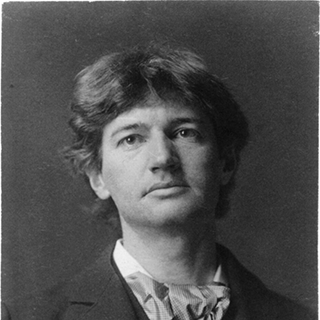
Bliss Carman, born in Fredericton, New Brunswick, in 1861, was a Canadian poet. The author of more than twenty books of poetry, including three series of Songs from Vagabondia (Copeland & Day), published in 1901, 1896, and 1894, respectively, he was recognized as Canada’s poet laureate. A noted translator of Sappho, Carman died on June 8, 1929, in New Canaan, Connecticut.