A Tragedy
Who’s that walking on the moorland?
Who’s that moving on the hill?
They are passing ’mid the bracken,
But the shadows grow and blacken
And I cannot see them clearly on the hill.
Who’s that calling on the moorland?
Who’s that crying on the hill?
Was it bird or was it human,
Was it child, or man, or woman,
Who was calling so sadly on the hill?
Who’s that running on the moorland?
Who’s that flying on the hill?
He is there—and there again,
But you cannot see him plain,
For the shadow lies so darkly on the hill.
What’s that lying in the heather?
What’s that lurking on the hill?
My horse will go no nearer,
And I cannot see it clearer,
But there’s something that is lying on the hill.
This poem is in the public domain. Published in Poem-a-Day on August 8, 2026, by the Academy of American Poets.
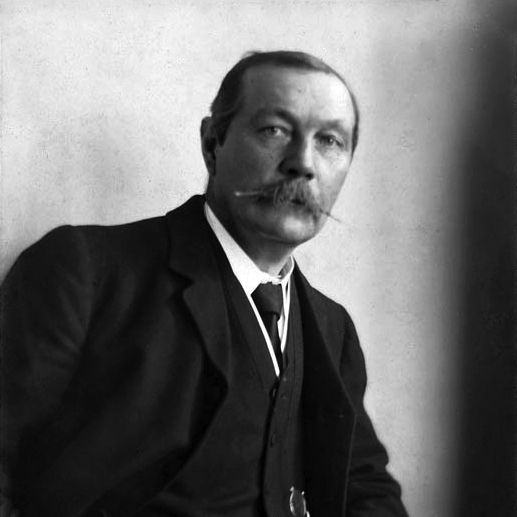
“A Tragedy” was collected in The Poems of Arthur Conan Doyle: Collected Edition (John Murray, 1922). About Doyle’s work, Kenneth Wilson, a doctoral student in the department of English at York University, writes in his essay “Fiction and Empire: The Case of Sir Arthur Conan Doyle,” published in the Victorian Review, Vol. 19, No. 1 (Summer 1993), “Sir Arthur Conan Doyle is usually remembered only as the famous creator of Sherlock Holmes, but Doyle himself believed that his historical romances were his most important work. He felt that detective stories were part of ‘a lower stratum of literary achievement,’ and he aspired to be a ‘serious’ writer; in writing historical romances, he believed he was following in the footsteps of Sir Walter Scott.”
Arthur Conan Doyle