
So Cruel Prison
So cruel prison how could betide, alas,
As proud Windsor? Where I in lust and joy
With a king’s son my childish years did pass
In greater feast than Priam’s sons of Troy;
Where each sweet place returns a taste full sour:
The large green courts, where we were wont to hove,
With eyes cast up unto the maidens’ tower,
And easy sighs, such as folk draw in love;
The stately salles, the ladies bright of hue,
The dances short, long tales of great delight;
With words and looks that tigers could but rue,
Where each of us did plead the other’s right;
The palm play where, despoiled for the game,
With dazed eyes oft we by gleams of love
Have miss’d the ball and got sight of our dame,
To bait her eyes, which kept the leads above;
The gravel’d ground, with sleeves tied on the helm,
On foaming horse, with swords and friendly hearts,
With cheer, as though the one should overwhelm,
Where we have fought, and chased oft with darts;
With silver drops the mead yet spread for ruth,
In active games of nimbleness and strength,
Where we did strain, trailed by swarms of youth,
Our tender limbs that yet shot up in length;
The secret groves which oft we made resound
Of pleasant plaint and of our ladies’ praise,
Recording oft what grace each one had found,
What hope of speed, what dread of long delays;
The wild forest, the clothed holt with green,
With reins aval’d, and swift y-breathed horse,
With cry of hounds and merry blasts between,
Where we did chase the fearful hart a force;
The void walls eke that harbor’d us each night,
Wherewith, alas, revive within my breast
The sweet accord, such sleeps as yet delight,
The pleasant dreams, the quiet bed of rest;
The secret thoughts imparted with such trust,
The wanton talk, the divers change of play,
The friendship sworn, each promise kept so just,
Wherewith we pass’d the winter nights away.
And with this thought the blood forsakes the face,
The tears berain my cheeks of deadly hue,
The which as soon as sobbing sighs (alas)
Upsupped have, thus I my plaint renew:
“O place of bliss, renewer of my woes,
Give me account—where is my noble fere?
Whom in thy walls thou didst each night enclose,
To other lief, but unto me most dear.”
Echo (alas) that doth my sorrow rue,
Returns thereto a hollow sound of plaint.
Thus I alone, where all my freedom grew,
In prison pine with bondage and restraint;
And with remembrance of the greater grief
To banish the less, I find my chief relief.
This poem is in the public domain. Published in Poem-a-Day on January 25, 2026, by the Academy of American Poets.
Surrey’s “So Cruel Prison” was published posthumously in Tottel’s Miscellany (1557) under the title “Prisoned in Windsor, he recounteth his pleasure there passed.” About the poem, Leah Larson, a professor of English at Our Lady of the Lake University in San Antonio, Texas, writes in The Facts on File Companion to British Poetry Before 1600 (Facts on File, 2008), “This poem by Henry Howard, Earl of Surrey concerns his imprisonment at Windsor Castle in 1537, probably for striking Sir Edward Seymour, the new queen’s brother.” She continues, “The poem begins with a personal cry lamenting Surrey’s situation. He recalls his youth at Windsor as passed ‘In greater feast than Priam’s sons of Troy’ (I. 4). In the next seven quatrains, Surrey focuses on the activities he and [Henry Fitzroy, Duke of] Richmond participated in during their youth—hunting, wrestling, jousting, playing games, riding, courting—and describes the places connected with each activity. All these activities emphasize the stark contrast between Surrey’s experience as the friend of the king’s son and that of prisoner. His depiction of his earlier experience highlights the courtliness of the youthful activities and perhaps indicates that such a noble era has passed, along with Richmond and the influence of the venerable Howard family, and been replaced by the upstart Seymour family. Thus, this poem of personal loss is also a reflection of the changes in English society.”
Henry Howard
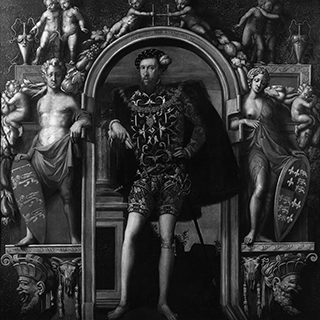
Henry Howard, Earl of Surrey, an early Tudor poet more commonly referred to by his title rather than his name, was born around 1517 in Hunsdon, Hertfordshire, England. The eldest son of Thomas Howard, Third Duke of Norfolk, Surrey was well educated as a child, and, in the humanist tradition, gained a strong command of classical literature. He was raised at Windsor Castle alongside Henry FitzRoy, Duke of Richmond and Somerset, the illegitimate son of Henry VIII, with whom he became good friends.