
My Son Rests His Cheek on the Wrecked Car
An act can be many things at once.
We can be deliverers or takers both.
Was he saying thank you to the airbags,
thank you to the chassis for its metal
promise to stop the impact short of
breath and body and the bureaucracy
of the outside world. Praising all of it
today. Praising the collision recalculated
that it could have been worse. Where
is poetry if it is not at the base of
the wreck. Rich said it clearly. So clear
we could see the ocean’s bottom
as if the glass had been emptied out
from one last sip. My son and then
my other son and then the one
who knows what I’m talking about.
What if I say I want this poem to bless
you, the reader. Will you take it? Will
you trust that it, line by line, truly
means to protest harm, means well?
Copyright © 2026 by Lory Bedikian. Originally published in Poem-a-Day on April 29, 2026, by the Academy of American Poets.
“In March 2025, on my deceased mother’s birthday, my children and I were in a terrible car accident. We all survived. The collision happened at a moment in our lives where progress seemed to finally be restarting. I thought I could never write about it, until my son pressed his cheek against the totaled vehicle—one we had saved for, had lived in for so many years. His gesture became symbol, then metaphor. It proved we can always write the impossible; we can poeticize almost anything, if necessary. Observation can sometimes heal, sometimes free us. There are gestures, moments, symbols everywhere for us to see, borrow, lend. The poetry helps create a path on which to continue.”
—Lory Bedikian
Lory Bedikian
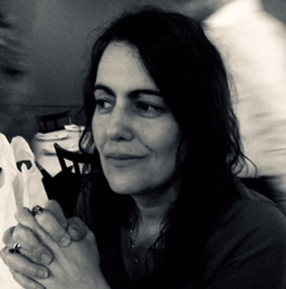
Lory Bedikian is the author of Jagadakeer: Apology to the Body (University of Nebraska Press, 2024), winner of the Prairie Schooner Raz–Shumaker Book Prize, and The Book of Lamenting (Anhinga Press, 2011), winner of the Philip Levine Prize.
Bedikian’s work has been supported by the Money for Women/Barbara Deming Memorial Fund. She lives in California on the ancestral lands of the Tongva.