Loneliness
Now it is Loneliness who comes at night
Instead of Sleep, to sit beside my bed.
Like a tired child I lie and wait her tread,
I watch her softly blowing out the light.
Motionless sitting, neither left nor right
She turns, and weary, weary droops her head.
She, too, is old; she, too, has fought the fight.
So, with the laurel she is garlanded.
Through the sad dark the slowly ebbing tide
Breaks on a barren shore, unsatisfied.
A strange wind flows ... then silence. I am fain
To turn to Loneliness, to take her hand,
Cling to her, waiting, till the barren land
Fills with the dreadful monotone of rain.
This poem is in the public domain. Published in Poem-a-Day on October 17, 2026, by the Academy of American Poets.
“Loneliness” was first published in Mansfield’s collection Poems (Constable & Co., Ltd, 1923), edited posthumously by her husband John Middleton Murry, who put the book together shortly after her death in January of that year. “Loneliness” belongs to the group Murry titled “Poems, 1911–1913” in that volume. About the theme of loneliness in Mansfield’s work, Melissa Alexander, an adjunct teaching fellow at Trinity College Dublin, writes in her essay “‘We Talked about Solitude’: Katherine Mansfield, Virginia Woolf, and Affective Bonding,” published in Critical Quarterly, Vol. 65, Issue 2 (July 2023), “Woolf and Mansfield use ‘loneliness’ and ‘solitude’ interchangeably, any positive or negative inflection depending on the surrounding adjectives or contexts. They capitalise on the polyvalency of these terms as the benefits of solitude/loneliness continually commingle with its pangs. For example, Mansfield prevaricates about the ecstasy of loneliness in a diary entry of 1922: ‘I find the rapture at being alone hard to understand. Certainly when I am sitting out of sight under a tree I feel I would be content to never return … “oh Loneliness of my sad heart is Queen.” It isn’t in the least that.’”
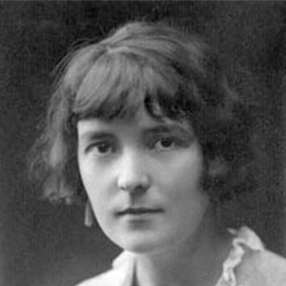
Katherine Mansfield