
The Lichens
Crinkly-thin, the perfect marriage of algae and fungi,
furbelowed and curled.
venerable ancestors: strange as vellum,
an onion poultice, leather jerkin
Johann Dillen’s portraits of 1741:
the ‘Strange Charactered Lichen, Black Dotted Wrinkled Lichen,
Leprous Black Nobb’d Lichen,
Crawfish Eye-like Lichen.’
the youngest occupy a wicker couch,
eavesdrop on the aunties’ tales, wonder
why so aged-looking, their skin?
‘Wanderflechten’—those who traveled
on deer’s hooves, birds’ feet, hot air balloon baskets over arid land.
travel’s allure, the turquoise ring, scarab bracelet
Those who embraced the seductions of moths’ wings,
gave their bodies to the hungers
of the ‘Brussels Lace Moths, Beautiful Hook-Tips, the Dingy Footman.’
when can we stay out past dawn?
Lichens who gave sustenance, grew thin,
flailed against famine,
lichen packed in the bodies of mummies.
these have an aura, a blue-mauve cloud
we can’t imagine the ribs’ furrows
Erik Acharius, 1808, the “father of lichenology,”
fastens samples onto herbarium sheets,
lichens’ filaments and flakes suspended.
nice—but not our father, who is spores and fragments
A thin cord anchors lichens to rock,
small bits chip off, wear of paw pad and fur,
take hold elsewhere.
we hear the wind caressing bark
Lichens swept up by grazing reindeer,
hot breath devouring, rub of meaty tongues,
meat toxic to herders—
radioactive fallout the lichens never meant to harbor.
ghostly stalks of trees, an ashy forest
we can barely look
A single spruce hosts a rare green and red-lobed lichen.
the odd one out, the one no one ever set eyes on
Lichens in the armpits of marble statues
differentiated from lichens on the thighs,
eaten by snails on moonless nights.
moonglow,
something we don’t know here, no one’s talking
A hummingbird’s nest, its outer layer
shingled gray-green with lichen flakes, a point of pride, see—
how beautiful they were, and useful.
Copyright © 2025 by Talvikki Ansel. Originally published in Poem-a-Day on December 22, 2025, by the Academy of American Poets.
“‘The Lichens’ was called ‘Family Album’ in an earlier draft as I imagined the stories of far-flung lichen family members. I was inspired by the presence and tenacity of lichens on trees and rocks and the roof-racks and side mirrors of my car. In researching lichens, I’m indebted to the books where I learned so much about their riveting natural history and biology: the inspiring Lichens by William Purvis and The Vanishing Lichens: Their History, Biology, and Importance by David Richardson. At some point, other voices—voices of the lichens themselves?—entered the poem.”
—Talvikki Ansel
Talvikki Ansel
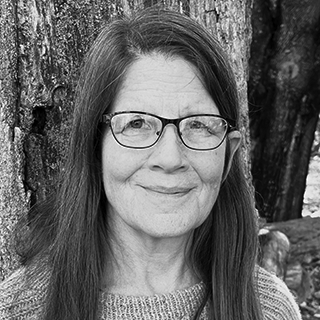
Talvikki Ansel is the author of Somewhere in Space (The Ohio State University Press, 2015); Jetty and Other Poems (Zoo Press, 2003); and My Shining Archipelago (Yale University Press, 1997). She lives in Rhode Island.