
Dumb Luck
that I was close enough
to put my arms around my mother
and slip my body beneath hers
as she crumpled.
The floor was cool.
The house was quiet.
Outside, the cosmos
were opening their petals,
emergency brakes wearing out.
How long we lay there
I couldn't say. My mother
had no desire to get up
or open her eyes or ask
what year it was
or where we were going.
She was heavier and softer
than I knew.
Against the thin blue glaze
of her veins I placed three fingers
and counted.
“This is bliss,” she said.
I heard the mailman
climb the steps to the front door
and drop something in the black box
and I knew my mother would be happy
to find something left there for her,
even if it were only
a save-the-date announcement.
"This is bliss," she said again,
and I became a gondola holding her,
a field, a hammock, a cradle,
a blue pagoda, a passenger ship.
Copyright © 2026 by Catherine Barnett. Originally published in Poem-a-Day on October 23, 2026, by the Academy of American Poets.
“Have you ever felt for your mother’s pulse? To feel for is different from to feel. I love both variations: I feel for you; I feel you. Maybe that’s what I love most in poetry: varieties of intimacy. And timelessness, lyric time. Lately when I’m with my mother we watch time-lapse videos, amazed (for example) as each asparagus spear sprints up. Before I fly back home across the country, I leave an envelope in her mailbox. To make it look as realistic as possible, I draw a forever stamp in the upper right-hand corner.”
—Catherine Barnett
Catherine Barnett
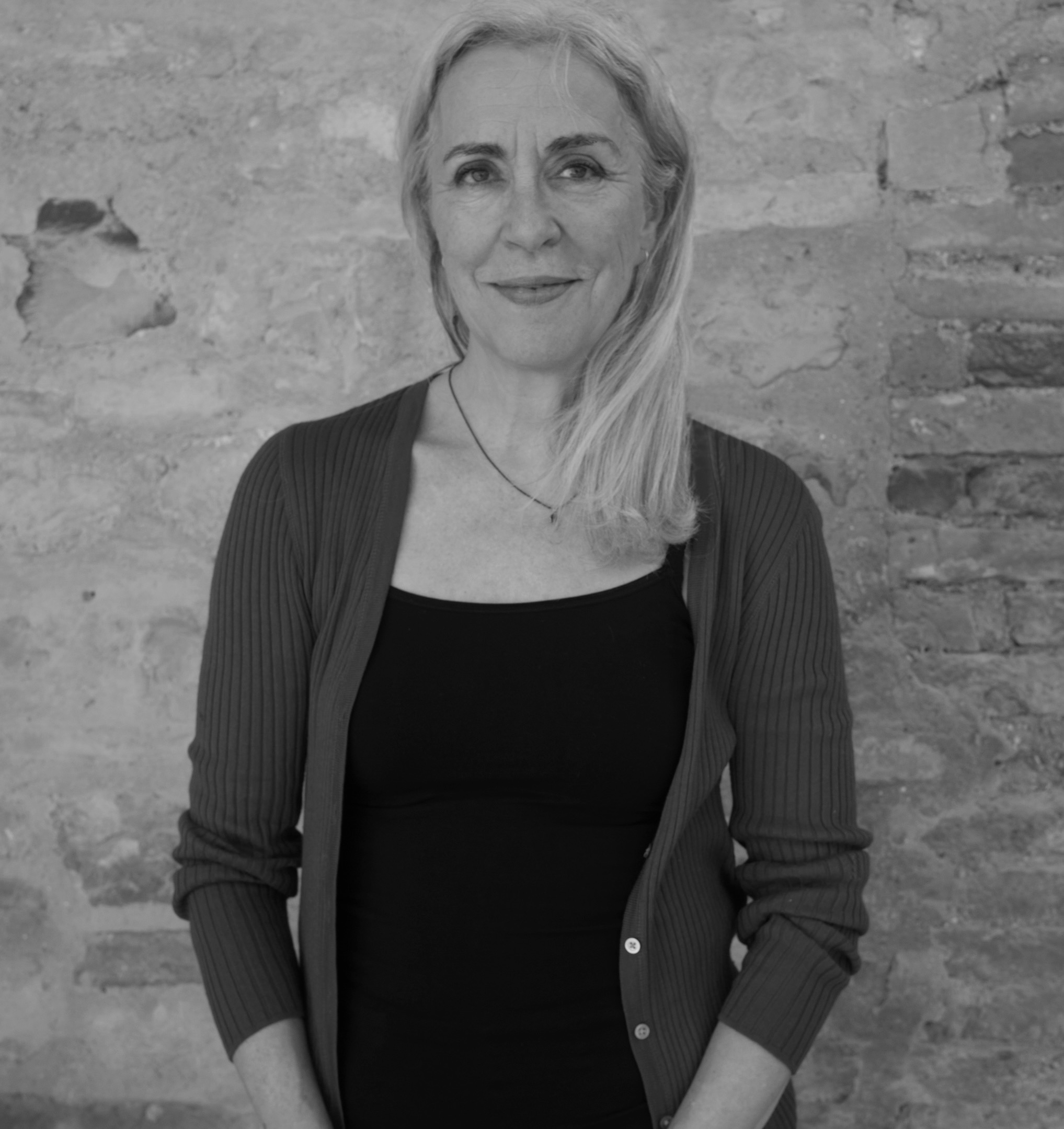
Catherine Barnett is the author of the collections Solutions for the Problem of Bodies in Space (Graywolf Press, 2024); Human Hours (Graywolf Press, 2018); The Game of Boxes (Graywolf Press, 2012), which was the recipient of the 2012 James Laughlin Award from the Academy of American Poets; and Into Perfect Spheres Such Holes Are Pierced (Alice James Books, 2004).