
Cynthia Wanders My Neighborhood
with the shock of hospice behind her
and her ashes scattered on her cherished Pacific.
She’s flipped the hourglass and stopped it at 29,
when her hair was still chestnut and waving
to her waist. And because it’s November and nighttime
she’s wearing one of those vintage wool coats,
wide lapels, no buttons or belt, a blue nearly gray
in the foggy noir light of the streetlamps.
It’s cold enough she has to hold it tight
against her body. Too cold for the emerald
silk teddy, or her long tanned legs in b-ball shorts,
ready for some serious one-on-one. I’m dying
to stop my steep climb home, turn around and ask her
if she’s really here, but Orpheus is in my ear,
warning me not to make that old mistake.
It’s about trust, I think. Keep moving
through the gloom of a spinned myth:
let those you’ve loved come back
when they’re ready, when you’re ready,
as if no one were lost to begin with.
Copyright © 2026 by Thomas Centolella. Originally published in Poem-a-Day on April 21, 2026, by the Academy of American Poets.
“Cynthia once said, ‘Every single person has a story that can rival any myth.’ When I learned of her death at fifty-eight from melanoma, we hadn’t been lovers for many years. Still, I was stunned. One night, climbing my street, passing a woman heading in the same direction, I was stunned again: She resembled a young Cynthia. Later, I imagined it was her spirit returning—to make sure I’d always remember her. It felt kind of archetypal, our version of the Eurydice [and] Orpheus story. Thus, the power of myth: It provides a narrative order so that we might endure the seemingly unendurable.”
—Thomas Centolella
Thomas Centolella
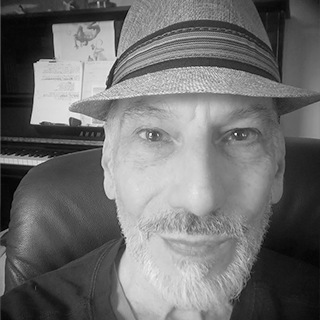
Thomas Centolella is the author of four poetry collections: Almost Human (Tupelo Press, 2017), winner of the Dorset Prize; Views from Along the Middle Way (Copper Canyon Press, 2002); Lights & Mysteries (Copper Canyon Press, 1995); and Terra Firma (Copper Canyon Press, 1990).
Centolella’s other honors include a Guggenheim Fellowship, Lannan Literary Award, a Lannan Foundation Residency, the American Book Award, the California Book Award, the Northern California Book Award, and publication in the National Poetry Series.