
Aubade on Piazza del Popolo with Saxophonist and Chopin
I think about him still. The lone boy
standing at an edge of the obelisk
at the crack of dawn playing a tune
I’d never heard, warm brass with cinnamon tendrils,
then sudden sweetness—a furtive gecko painting its tail
across the unfolding. You are right to ask
what a seventeen-year-old girl was doing there.
I was a runaway. It’s no tragedy. I had meant
for an epic rebellion, but was gently held,
my days thrilled from end to end. A bygone era.
I couldn’t tell you what I was doing. I only know
that I stood three meters from this boy, his skin a hue
even deeper than mine in that city hell-bent
on drowning us under its weight.
Gray and blue and purple wafting behind him
more ancient than any ruin, even as they slide
into light. He grew me into something else, this boy.
Something no longer a child. Stale smoke
on the morning air, a tang of espresso beans.
Head upturned, eyes closed, casual
as the first raindrop, he slid a nocturne
in C sharp minor between loneliness
and solitude like tucking a hand under
a shoulder blade. Perhaps this, my skin engulfed
in morning dew and music,
is the true human romance.
Immune to purpose. Just a hinge
between day and night,
the right to be a body in its body.
Copyright © 2026 by Ashna Ali. Originally published in Poem-a-Day on May 11, 2026, by the Academy of American Poets.
“This poem recalls a moment of profound awe I experienced as a young person, and that filled my body with recognition of the power of music and public art. I grew up in Rome, Italy, a city that, to this day, honors and celebrates art—public and private—but struggles to honor the presence and contributions of immigrants and migrants of color. This poem recognizes the kind of silent solidarities that can occur between a brown teen girl and an adult Black musician in a city that renders them both invisible. It also works as an ode to Rome—to music, to art, and perhaps most importantly, beauty as a life-affirming force.”
—Ashna Ali
Ashna Ali
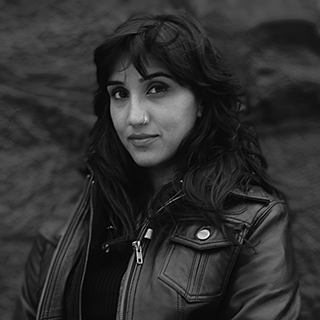
Ashna Ali is a queer and disabled Bangladeshi American poet. They earned their MFA from Randolph College where they were a Nancy Craig Blackburn ’71 Fellow.
Ali is the author of The Relativity of Living Well (Bone Bouquet, 2024). The recipient of additional fellowships from Brooklyn Poets and In Surreal Life, they live in Brooklyn, New York, on unceded Lenapehoking land.