
[And I return to the field]
and i return to the field
that i never leave other boys
are here too stamping the bruise-dark grass
one of us stands alone between posts
and waits for the rest to rifle
a ball through the dark and toward the net
he defends security lights
from the school on the embankment
above us cast angles and shadows that cut
through our bodies
and abstract them all i have learned
up till now is fear
of opaque windows
in houses outside the fence of headlights
to lone cars that pass leaving a wake
of deeper dark of the neighbor nightwalking
his brindled, snarl-jawed dog of other boys
laughing and taunting before their volleys
bullet toward and beyond the boy guarding the net
of myself how i understand no choice
but to join them
then i am called
to stand between the posts
and what else can I do
when i am there
other boys strike the one ball
shared between us and it sidewinds
out of the dark hurtling above or around or
sometimes straight at me
and what else
can i do crouched in my place
and ready to throw my body
after the ball as it rips out of the night
but raise my own laughter against them
the boys arrayed 20 yards away and aiming
for my failure but ring out with a taunting
glee of my own
until i call another boy
to his turn and walk back to the edge
of the group and wait to stand over the ball
and hope to make the new boy
lay down his body for our game as i
have laid down mine
and at the end of it
what else can i do but return the shoves
of other boys as we send each other
away in a gesture we refuse to name as love
and slip through the fence gap
where we first snuck in and leave
the field i can never leave and all my fear intact
be gone
Copyright © 2026 by Iain Haley Pollock. Originally published in Poem-a-Day on January 22, 2026, by the Academy of American Poets.
“Folks in my community play pick-up games of soccer on a turf field behind our town’s high school until no sun is left to light their playing. Sometimes [they play] longer. Walking in the neighborhood one night, I became aware of a group of teenaged boys still shooting at a goal on the pitch-dark field. Seeing these boys at the serious work of play eventually led me to think about my own boyhood and how I learned to perform masculinity. This thinking about gender identity dovetailed with a growing preoccupation in my recent poems: fear as an animating force in my own life and in contemporary American life.”
—Iain Haley Pollock
Iain Haley Pollock
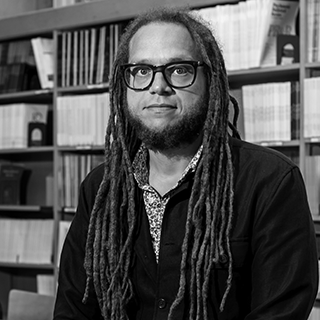
Iain Haley Pollock is the author of All the Possible Bodies (Alice James Books, 2025); Ghost, Like a Place (Alice James Books, 2018); and Spit Back a Boy (University of Georgia Press, 2011). In 2023, he was a recipient of a NYSCA/NYFA Artist Fellowship.
The director of the creative writing MFA program at Manhattanville University, Pollock lives in lower Hudson Valley, New York.