From “The Temple of Nature,” Canto I (The Production of Life) [III. Now rose in purple pomp the breezy dawn,]
III. Now rose in purple pomp the breezy dawn,
And crimson dew-drops trembled on the lawn;
Blaz’d high in air the temple’s golden vanes,
And dancing shadows veer’d upon the plains.—
Long trains of virgins from the sacred grove,
Pair after pair, in bright procession move,
With flower-fill’d baskets round the altar throng,
Or swing their censers, as they wind along.
The fair Urania leads the blushing bands,
Presents their offerings with unsullied hands;
Pleas’d to their dazzled eyes in part unshrouds
The goddess-form;—the rest is hid in clouds.
“Priestess of Nature! while with pious awe
Thy votary bends, the mystic veil withdraw;
Charm after charm, succession bright, display,
And give the Goddess to adoring day!
So kneeling realms shall own the Power divine,
And heaven and earth pour incense on her shrine.
“Oh grant the Muse with pausing step to press
Each sun-bright avenue, and green recess;
Led by thy hand survey the trophied walls,
The statued galleries, and the pictur’d halls;
Scan the proud pyramid, and arch sublime,
Earth-canker’d urn, medallion green with time,
Stern busts of Gods, with helmed heroes mix’d,
And Beauty’s radiant forms, that smile betwixt.
“Waked by thy voice, transmuted by thy wand,
Their lips shall open, and their arms expand;
The love-lost lady, and the warrior slain,
Leap from their tombs, and sigh or fight again.
—So when ill-fated Orpheus tuned to woe
His potent lyre, and sought the realms below;
Charm’d into life unreal forms respir’d,
And list’ning shades the dulcet notes admir’d.—
“Love led the Sage through Death’s tremendous porch,
Cheer’d with his smile, and lighted with his torch;—
Hell’s triple Dog his playful jaws expands,
Fawns round the God, and licks his baby hands;
In wondering groups the shadowy nations throng,
And sigh or simper, as he steps along;
Sad swains, and nymphs forlorn, on Lethe’s brink,
Hug their past sorrows, and refuse to drink;
Night’s dazzled Empress feels the golden flame
Play round her breast, and melt her frozen frame;
Charms with soft words, and sooths with amorous wiles,
Her iron-hearted Lord,—and Pluto smiles.—
His trembling Bride the Bard triumphant led
From the pale mansions of the astonish’d dead;
Gave the fair phantom to admiring light,—
Ah, soon again to tread irremeable night!”
This poem is in the public domain. Published in Poem-a-Day on June 7, 2026, by the Academy of American Poets.
This excerpt from Erasmus Darwin’s posthumously published The Temple of Nature (J. Johnson, 1803) exemplifies his poetic approach to the sciences, exploring both the facts and mysteries of nature through myth and allegory. About the poem, J. P. Daly, a research professor at Stanford University, writes in their essay “The Botanic Universe: Generative Nature and Erasmus Darwin’s Cosmic Transformism,” published in Republics of Letters, Volume 6, Issue 1 (March 2018), “[H]e chose to position the origin of human society not simply within the context of the transformation of organic species, but within his much broader, universal vision of transformation. He anchored the first canto in the origin of the universe and the genesis of life, guided by Urania, goddess and muse of astronomy. [...] Darwin’s poetic phrasing left open the possibility that the emergence of life was a phenomenon found on planets across the universe wherever appropriate conditions were to be had. From such conditions, Urania said, chemic transformations gave ‘matter its eccentric wings,’ and driven by vital internal properties, transformed inert matter into simple life. This life, in turn, improved and transformed through time, ultimately giving rise to humankind.”
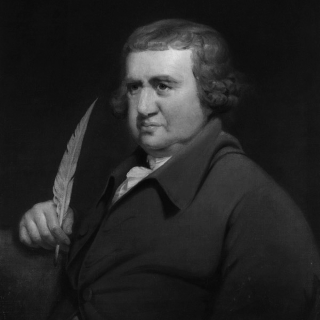
Erasmus Darwin