
People and a Heron
A desert of weed and water-darkened stone under my western windows
The ebb lasted all afternoon,
And many pieces of humanity, men, women, and children, gathering shellfish,
Swarmed with voices of gulls the sea-breach.
At twilight they went off together, the verge was left vacant, an evening heron
Bent broad wings over the black ebb,
And left me wondering why a lone bird was dearer to me than many people.
Well: rare is dear: but also I suppose
Well reconciled with the world but not with our own natures we grudge to see them
Reflected on the world for a mirror.
This poem is in the public domain. Published in Poem-a-Day on September 20, 2026, by the Academy of American Poets.
“People and a Heron” was collected in Robinson Jeffers’s Roan Stallion, Tamar and Other Poems (Liveright, 1925). About the collection, Robert Brophy, a professor of English at California State University, Long Beach, and a founding member of the Robinson Jeffers Association, writes in his book, Robinson Jeffers: Dimensions of a Poet (Fordham University Press, 1995), “By the time of Roan Stallion, the view of nature Jeffers had derived at least partly from his engagement with science had become fundamental—both thematically and formally—to his narrative work. In particular Jeffers is compelled by this quality of transformation, and his focus on it is largely the way he moves beyond the positivism of late nineteenth-century science to formulate a ‘nature’ that is both scientific and aesthetic. And in part his turn to narrative reflects his search for a mode that would allow him to explore the complexities of his desire to affirm beauty and human meaning and yet also affirm his recognition of the insignificance of human desire and will in the natural order that science revealed.”
Robinson Jeffers
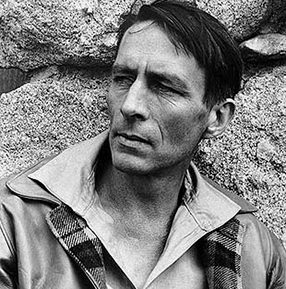
Robinson Jeffers, born on January 10, 1887, in Pennsylvania, was a poet and a pioneer of ecopoetics. A former Chancellor, Jeffers authored numerous poetry collections, including The Double Axe and Other Poems (Random House, 1948) and The Woman at Point Sur (Liveright, 1927). Jeffers died on January 20, 1962, in Carmel, California.