The Human Seasons
Four Seasons fill the measure of the year;
There are four seasons in the mind of man:
He has his lusty Spring, when fancy clear
Takes in all beauty with an easy span:
He has his Summer, when luxuriously
Spring’s honied cud of youthful thought he loves
To ruminate, and by such dreaming high
Is nearest unto heaven: quiet coves
His soul has in its Autumn, when his wings
He furleth close; contented so to look
On mists in idleness—to let fair things
Pass by unheeded as a threshold brook.
He has his Winter too of pale misfeature,
Or else he would forego his mortal nature.
This poem is in the public domain. Published in Poem-a-Day on August 9, 2026, by the Academy of American Poets.
John Keats’s sonnet “The Human Seasons” was written as part of a letter to his close friend Benjamin Bailey. As a foreword to the poem, Keats writes in his letter, “As tradesmen say everything is worth what it will fetch, so probably every mental pursuit takes its reality and worth from the ardour of the pursuer—being in itself a Nothing. Ethereal things may at least be thus real, divided under three heads—Things real—things semireal—and nothings. Things real, such as existences of Sun moon and Stars—and passages of Shakspeare.—Things semireal, such as love, the Clouds etc., which require a greeting of the Spirit to make them wholly exist—and Nothings, which are made great and dignified by an ardent pursuit—which, by the by, stamp the Burgundy mark on the bottles of our minds, insomuch as they are able to ‘consecrate whate’er they look upon.’ I have written a sonnet here of a somewhat collateral nature—so don’t imagine it an ‘apropos des bottes’—.” Although untitled in the letter, the poem was later collected by Leigh Hunt in his 1819 Literary Pocket-Book and given a title.
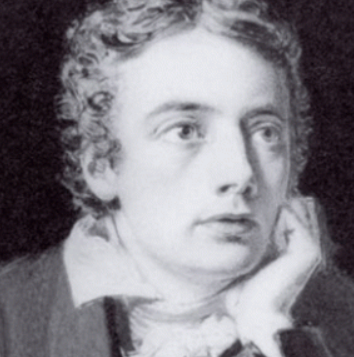
John Keats