
The Shoes My Mother Hated, in Fairness, Were Ugly
& covered in smudges & peeling suede & sparked arguments
every time I wore them out of the house. Yes, I wanted to wear
those shoes, the ones that looked like we couldn’t afford anything
better. I’d been practicing to clownwalk / glide / modeled my body’s
movement after Usher & slid on concrete smoother than slicing
an avocado’s flesh. I wanted to say: I don’t need beauty.
The first time I believed in sorcery was when I saw Jesse windmill
his six-foot-two body into a freeze, lifting his long legs
with such precision I almost cried. I wanted to become liquid,
for my body to wave & shimmer & never be forced into rolling
my hips if the beat was hard enough to six-step to. The best b-boys
uprocked with anchors in their feet, placed red cups on the floor
to show me where to land. They said if I could do a handstand
they could teach me to break, that my footwork was good enough
for an invitation to the crew, for their eyes not to linger on my chest
when I danced. But they couldn’t explain why every b-boy
carried loose change in his pockets—a second after the music blared,
they went airborne, littering the courtyard with quarters, laughing.
We freestyled every day after school but never prepared a routine.
This, like everything, was a practice in freedom. We needed the music,
each other, our specially selected sneakers to assist in the fantasy
that we too were elemental: water, fire, smoke, math. We defied
the teachers that hated us with our daily dose of Kanye, Nas,
gloves & cardboard boxes, horchata & gas station snacks.
Somewhere between snaking & signing, I forged my gender
into something my body could interpret. I found its humor.
I opted out of beauty & became something else for a while.
My mother never saw me dance.
Copyright © 2026 by Ariana Brown. Originally published in Poem-a-Day on June 19, 2026, by the Academy of American Poets.
“In high school, I was one of the only girls in my hip-hop crew. This poem is an ode to the freedom I found in embodying certain kinds of masculinity through dance, my fascination with hip-hop and all its forms of movement; and my curiosity about the ways in which gender is mapped onto the body whether one consents or not. I suppose it is also an ode to the queer, nonbinary, and gender nonconforming women I saw in hip-hop who refused compulsory femininity in favor of something truer to themselves.”
—Ariana Brown
Ariana Brown
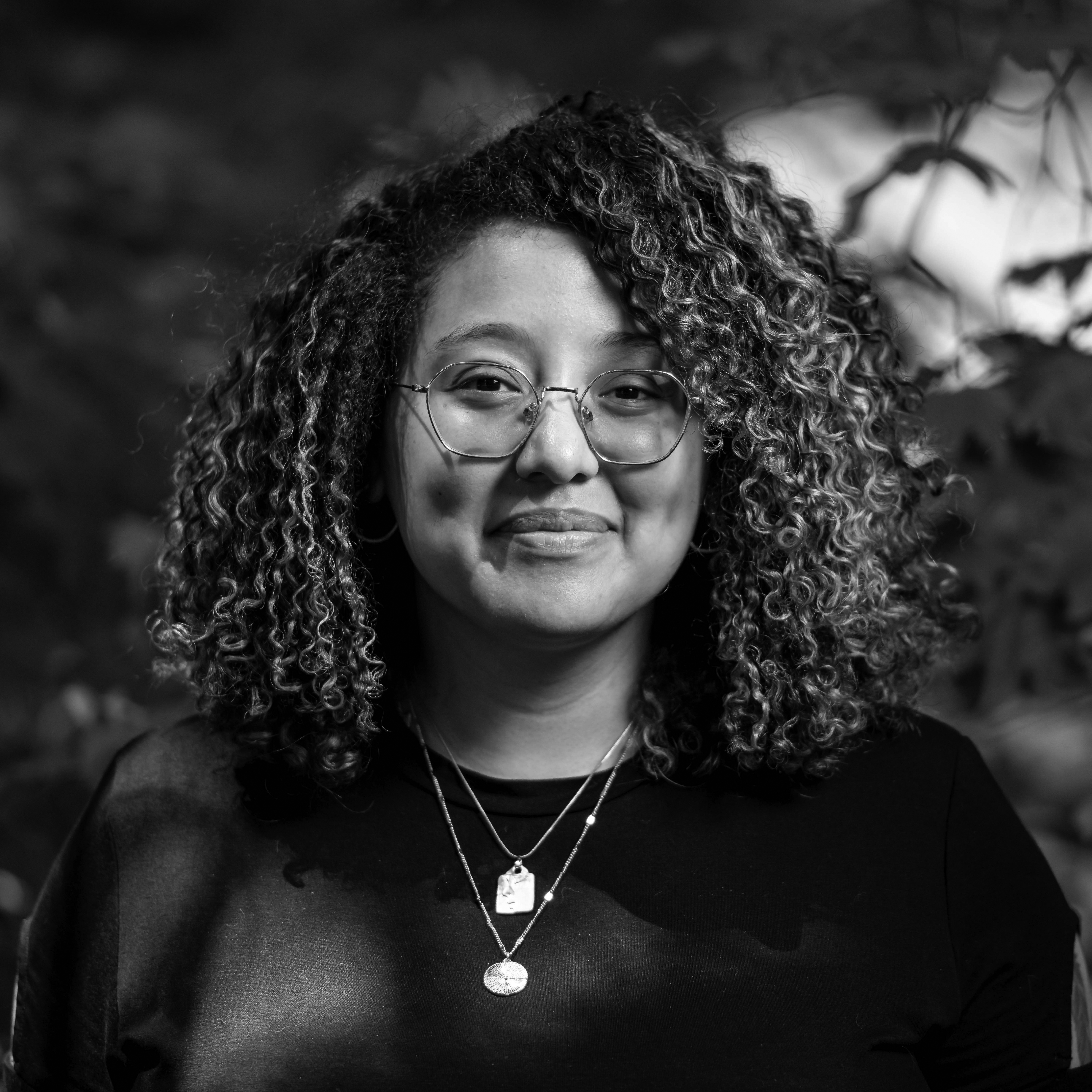
Ariana Brown is a queer and Black Mexican American poet. She holds a BA in African diaspora studies and Mexican American studies from the University of Texas at Austin, an MFA in poetry from the University of Pittsburgh, and an MS in library science from the University of North Texas.
Brown is the author of We Are Owed. (Grieveland, 2021) and Sana Sana (Game Over Books, 2020). The winner of two Academy of American Poets University and College Prizes, she is also the recipient of a National Association of Latino Arts and Cultures grant.