
No Second Troy
Why should I blame her that she filled my days
With misery, or that she would of late
Have taught to ignorant men most violent ways,
Or hurled the little streets upon the great,
Had they but courage equal to desire?
What could have made her peaceful with a mind
That nobleness made simple as a fire,
With beauty like a tightened bow, a kind
That is not natural in an age like this,
Being high and solitary and most stern?
Why, what could she have done being what she is?
Was there another Troy for her to burn?
This poem is in the public domain. Published in Poem-a-Day on August 2, 2026, by the Academy of American Poets.
“No Second Troy” was published in W. B. Yeats’s collection The Green Helmet and Other Poems (Macmillan, 1912). About the poem, Kevin Boyle, a retired professor of English at Elon University, writes in his essay “‘No Second Troy’ by William Butler Yeats” (EBSCO, 2022), “‘No Second Troy’ is a poem that delves into the complexities of love and societal conflict through a series of questions. Composed in twelve lines of iambic pentameter, the poem reflects Yeats’s personal feelings towards Maud Gonne, a woman he loved deeply but who ultimately rejected him. He grapples with the impact of her actions on his life, suggesting that her inability to find a suitable role in society leads to both personal and social turmoil. By comparing Gonne to Helen of Troy, Yeats draws on classical mythology to explore themes of beauty, violence, and the constraints of their contemporary Irish culture.”
W. B. Yeats
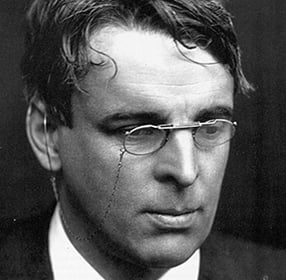
William Butler Yeats, widely considered one of the greatest poets of the English language, received the 1923 Nobel Prize for Literature. His work was greatly influenced by the heritage and politics of Ireland.